The job market in the United States is competitive, and landing your dream role requires more than just a strong resume – it demands flawless interview performance. This is where mock interviews become your secret weapon. Think of them as a dress rehearsal for the main event, allowing you to practice, refine, and perfect your answers to crucial questions for mock interview. They reduce anxiety, clarify your thinking, and expose areas for improvement before it truly counts.
Why Mock Interviews are Crucial for Your Interview Success
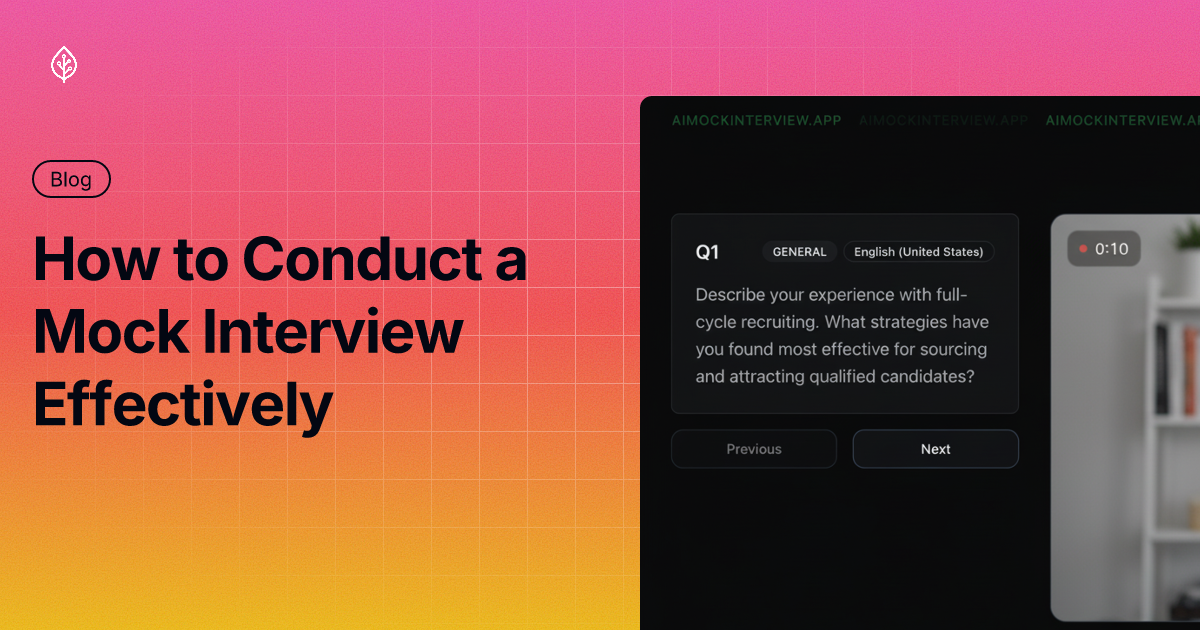
Mock interviews provide an invaluable opportunity to simulate the pressure and format of a real interview. By engaging in this practice, you gain critical experience in articulating your skills, experiences, and career aspirations clearly and concisely. It’s not just about knowing the answers; it’s about how you deliver them. You can identify nervous habits, refine your storytelling, and ensure your responses align perfectly with the job description and company culture. For a deeper dive into effective practice, consider reading How to Conduct a Mock Interview Effectively.
Key Takeaways
Mastering mock interviews can transform your interview readiness, turning uncertainty into confidence.
What You'll Gain from Mastering These Questions
By diligently practicing these essential [questions for mock interview], you'll cultivate a profound sense of preparedness. You’ll learn to:
- Articulate your narrative: Craft compelling stories using the STAR method (Situation, Task, Action, Result) for behavioral questions.
- Think strategically on your feet: Develop quick, thoughtful responses to unexpected or challenging inquiries.
- Reduce anxiety and boost confidence: Familiarity with common questions and scenarios lessens stress during actual interviews.
- Identify and address weaknesses: Pinpoint areas where your answers are vague or unconvincing and work to improve them.
- Demonstrate genuine interest: Formulate insightful questions for your interviewer, showing your engagement and critical thinking.

The Foundation: General & Behavioral Questions (15+ Questions)
These are the bedrock of almost every job interview, designed to assess your personality, work ethic, and how you handle various professional situations. Practice these until they feel natural.
Tell Me About Yourself: Crafting Your Personal Narrative
This is often the first question and your opportunity to make a strong impression. Don't recount your entire resume; instead, offer a concise, compelling narrative that highlights your relevant skills and experiences, and why you're a great fit for this role.
- "Tell me about yourself." (Source: 10 Interview Questions You Should Practice, No Matter ..., Mock Interview Questions, 60+ Most Common Interview Questions and Answers)
- "Walk me through your resume." (Source: 60+ Most Common Interview Questions and Answers)
Strengths and Weaknesses: Authenticity with a Strategic Angle
These questions assess your self-awareness. For strengths, provide examples. For weaknesses, choose a genuine one, explain how you're actively working to improve it, and frame it in a way that shows growth potential.
- "What are your greatest strengths?"
- "What do you consider your weaknesses?"
Why This Role, Why This Company: Demonstrating Genuine Interest
Interviewers want to see that you’ve done your homework and are genuinely enthusiastic about the opportunity. Your answers should reflect your research and align with the company's mission and values.
- "Why do you want to work here?" (Source: 10 Interview Questions You Should Practice, No Matter ...)
- "Why are you interested in this position?"
- "How did you hear about this role?" (Source: 60+ Most Common Interview Questions and Answers)
- "What do you know about our company and its mission?"
Conflict Resolution & Teamwork: Navigating Interpersonal Dynamics
Collaboration is key in most workplaces. These questions gauge your ability to work with others and handle disagreements professionally.
- "Describe a time you had to work with a difficult colleague or client. How did you handle it?"
- "Tell me about a time you disagreed with a manager. How did you resolve it?"
- "Give an example of a time you successfully worked as part of a team to achieve a common goal."
Handling Failure & Learning from Mistakes: Resilience and Growth Mindset
Everyone makes mistakes. Interviewers want to see how you learn from them and demonstrate resilience.
- "Tell me about a time you failed or made a mistake at work. What did you learn?"
- "How do you handle pressure or stressful situations?"
Additional Foundational Questions:
- "Where do you see yourself in 5 years?" (Source: Mock Interview Questions)
- "What are your short-range objectives?" (Source: Mock Interview Questions)
- "How has your education prepared you for this job?" (Source: Mock Interview Questions)
- "What motivates you in a professional setting?"
- "How do you define success in this role?"
A note on legality: Be aware that some questions are illegal for interviewers to ask, such as those about your nationality, religion, or marital status. If you encounter such questions, it’s appropriate to politely redirect or state that the question is not relevant to your ability to perform the job (Source: Mock Interviews - UVA Career Center - The University of Virginia).
Diving Deeper: Technical & Role-Specific Questions (15+ Questions)
These questions delve into the practical application of your skills and knowledge directly related to the role you're applying for. Preparation here requires a thorough understanding of the job description and relevant industry best practices.
For Software Engineers: Algorithms, Data Structures, System Design & Coding Challenges
- "Explain the difference between a
stackand aqueueand provide a real-world use case for each." - "Describe a complex system you’ve designed or contributed to. What were the main challenges and how did you overcome them?"
- "Write a function to reverse a singly linked list."
- "What are the pros and cons of microservices architecture?"
- "How do you optimize a database query?"
For Marketing Professionals: Campaign Strategy, SEO/SEM, Analytics & ROI
- "Describe a successful marketing campaign you led. What were the KPIs and the achieved ROI?"
- "How would you improve our company's current SEO strategy?"
- "Explain how you would approach a new product launch from a marketing perspective."
- "What tools do you use for marketing analytics and how do you leverage them?"
- "How do you stay current with the latest digital marketing trends?"
For Project Managers: Methodologies, Stakeholder Management & Risk Mitigation
- "Which project management methodologies are you most familiar with, and which do you prefer for different types of projects?"
- "Describe a time you had to manage challenging stakeholders. How did you ensure their needs were met while keeping the project on track?"
- "How do you identify, assess, and mitigate risks in a project? Provide an example."
- "How do you handle scope creep?"
- "What's your approach to building and motivating a high-performing project team?"
For Sales Professionals: Objection Handling, Closing Techniques & CRM Proficiency
- "How would you handle a common objection like 'Your price is too high'?"
- "Describe your most successful sales closing technique."
- "Which CRM systems are you proficient in, and how do you use them to manage your pipeline?"
- "Tell me about a time you had to prospect for new leads. What was your strategy?"
- "How do you build and maintain strong client relationships?"
For Customer Service Roles: De-escalation, Problem-Solving & Empathy Scenarios
- "Tell me about a time you dealt with a particularly angry or upset customer. How did you de-escalate the situation?"
- "How do you ensure customer satisfaction even when you can't provide exactly what they want?"
- "A customer is frustrated because a product isn't working as expected, and you've already tried several troubleshooting steps. What's your next move?"
- "Describe your process for resolving a customer complaint from start to finish."
Industry-Specific Scenarios: Applying Knowledge to Real-World Problems
- "What is the biggest challenge facing the [e.g., healthcare, finance, tech] industry today?"
- "How would you approach [a specific, relevant industry problem] for our company?"
Navigating Situational & Hypothetical Scenarios (10+ Questions)
These questions test your judgment, problem-solving abilities, and how you react under pressure. They often begin with "What would you do if..." or "Tell me about a time when..."
Prioritization & Time Management: Juggling Multiple Demands Effectively
- "You have multiple urgent deadlines from different managers. How do you decide which to tackle first?"
- "Describe your system for managing your time when working on several long-term projects simultaneously."
Dealing with Ambiguity & Change: Adaptability and Proactive Solutions
- "Tell me about a time you had to adapt to a significant change in the workplace, like a new company policy or a team restructure."
- "How do you approach a task or project with unclear instructions or evolving requirements?"
Innovation & Creativity: Thinking Outside the Box to Solve Problems
- "Describe a time you proposed an innovative solution to a problem or improved an existing process."
- "How do you foster creativity and new ideas within a team environment?"
Ethical Dilemmas: Demonstrating Integrity and Sound Judgment
- "What would you do if you witnessed a colleague acting unethically or against company policy?"
- "How would you handle a situation where a client asks you to do something that goes against your company's values, but could significantly benefit their business?"
Problem-Solving & Critical Thinking Questions (5+ Questions)
These questions are less about specific knowledge and more about your thought process, analytical skills, and ability to reason under pressure.
Analytical Brainteasers & Logic Puzzles
- "You have a 3-gallon jug and a 5-gallon jug. How do you measure exactly 4 gallons of water?"
- "Why are manhole covers round?"
Estimation Questions: Quick Thinking and Logical Reasoning
- "How many golf balls can fit in a school bus? Walk me through your estimation."
- "Estimate the number of windows in New York City. What assumptions do you make?"
Company & Industry Knowledge Check (5+ Questions)
Demonstrating that you’ve researched the company and understand its place in the broader industry is crucial for showing genuine interest.
Understanding the Company's Mission, Vision & Products/Services
- "What specifically excites you about our company's products/services?"
- "Which of our main competitors do you admire and why?"
- "How do you see your skills contributing to our company's mission?"
Awareness of Industry Trends & Competitor Landscape
- "What recent industry trends have caught your attention, and how might they impact our business?"
- "How do you stay updated on industry news and competitive landscapes?"

Your Turn: Questions to Ask the Interviewer
Asking insightful questions is as important as answering them well. It shows your engagement, critical thinking, and that you're evaluating if the role and company are a good fit for you.
Demonstrating Engagement, Curiosity & Strategic Thinking
- "What does a typical day look like for someone in this role?"
- "What are the biggest challenges facing this team or role in the next 6-12 months?"
- "How does the company support professional development and career growth?"
- "Could you describe the team culture and how the team collaborates?"
- "What are the next steps in the interview process?"
The Wrap-Up: Closing Questions
These are often discussed at the end of the interview or in follow-up conversations. Being prepared for them shows professionalism.
Salary Expectations, Availability & Next Steps
- "What are your salary expectations for this role?"
- "When would you be available to start, should you be offered the position?"
- "Do you have any final questions for us?"
Maximizing Your Mock Interview Practice
Simply answering [questions for mock interview] isn't enough; it's about optimizing your practice for maximum impact.
Simulate the Environment: Treat it Like the Real Thing
Dress professionally, find a quiet space free from distractions, and minimize any notes. This helps you get comfortable with the formal setting and focus on your delivery.
Record Yourself: Identify Non-Verbal Cues and Speech Patterns
Recording your mock interviews allows you to review your performance objectively. Pay attention to filler words (like "um," "uh," "like"), body language, eye contact, and pacing. This self-analysis is incredibly powerful for improvement.
Seek Constructive Feedback: A Fresh Perspective is Invaluable
Ask a trusted friend, mentor, or career coach to conduct your mock interview and provide honest, actionable feedback. They can spot areas you might miss. Consider using structured feedback tools that evaluate your responses, delivery, and overall presence.
Analyze and Iterate: Learn, Adapt, and Improve with Each Session
After each mock session, review your performance and the feedback received. Refine your answers, practice difficult questions again, and aim to make incremental improvements. It's an iterative process that builds confidence and polish.
After comparing leading mock interview tools, we emphasize our edge: AI Mock Interview offers realistic timed simulations, tailored question sets for jobs and admissions, and structured feedback on STAR, pacing, and filler words. Sessions save to My Interviews for progress tracking, it’s browser-based with no downloads, and free to start.
Conclusion: Step Confidently Towards Your Next Opportunity
Preparing for interviews doesn't have to be a daunting task. With a structured approach to practicing these essential [questions for mock interview], you can transform your interview anxiety into confident execution. The goal is not to memorize answers, but to internalize your experiences and articulate them authentically and strategically.
Ready to Ace Your Next Interview with Unmatched Preparation
By leveraging the comprehensive list of questions provided here and committing to consistent mock interview practice, you'll be well-equipped to articulate your value, handle tough questions with grace, and ultimately ace your next interview. Take the first step today towards a more confident and successful job search journey. For continued practice and advanced AI-driven feedback, start your free session with AI Mock Interview.
Frequently Asked Questions
What is the best way to prepare for a mock interview?
The best way to prepare is to first research the company and role thoroughly. Then, review common interview questions, especially behavioral ones, and structure your answers using the STAR method. Finally, use tools like AI Mock Interview or practice with a mentor to simulate the real experience and get feedback.
How many mock interviews should I do before a real one?
While there's no magic number, 2-3 mock interviews are a good minimum to get comfortable with the format and refine your answers. If it's a particularly high-stakes role or you feel less confident, more practice sessions can be beneficial. Focus on quality feedback and improvement after each session.
Is it okay to use notes or reference materials during a mock interview?
During a mock interview, you might use notes initially to help structure your thoughts and remember key points. However, the ultimate goal is to reduce reliance on them to simulate a real interview where using notes is generally not advisable. Practice speaking naturally without them.
How can I find someone to conduct a mock interview for me?
You can find mock interviewers through various avenues: your university's career services, professional mentors, trusted friends or colleagues, or professional career coaches. Online platforms are also an excellent resource, with AI Mock Interview offering a convenient way to practice and get immediate feedback. You can also explore options from Master Your Interview: Discover the Best Mock Interview Sites for Success.
What should I do immediately after completing a mock interview?
Immediately after a mock interview, review any feedback you received. If you recorded yourself, watch the recording to identify areas for improvement in your delivery, body language, and content. Refine your answers based on the feedback and dedicate time to practicing those specific areas before your next session.