The MBA admissions process is a high-stakes arena. With acceptance rates at top-tier programs like Stanford GSB and Harvard Business School hovering notoriously low—often between 6% and 10%—getting your foot in the door is an achievement in itself.
You’ve optimized your GMAT scores, polished your essays, and secured glowing recommendations. Now, the interview stands as the final, critical gatekeeper. For many candidates, this face-to-face (or Zoom-to-Zoom) evaluation sparks significant anxiety.
The solution? A rigorous, data-driven MBA mock interview. It is not merely practice; it is a strategic rehearsal designed to refine your personal brand, sharpen your delivery, and build unshakeable confidence.
An effective MBA mock interview experience can transform raw potential into a polished, executive-level performance. Let’s explore why this preparation is the highest-ROI activity you can do after hitting "submit."
Why an MBA Mock Interview is Critical for Success
Facing an MBA admissions committee (AdCom) is unlike any corporate job interview. Schools are not just looking for smart employees; they are hunting for future CEOs and global leaders.
According to admissions data from sources like Poets&Quants, if you are invited to interview, you have typically passed the initial screening. At many M7 schools, the acceptance rate for interviewed candidates jumps to roughly 50%. This means the interview is literally the "tipping point" of your application. An MBA mock interview ensures you land on the right side of that statistic.
Sharpening Your Story and Communication
Your application provides the data points; the interview provides the soul. An MBA mock interview forces you to articulate your "Why MBA?" and "Why Now?" narratives concisely.
Admissions officers read thousands of applications. In a mock setting, you learn to connect your past achievements to your future goals without rambling. This practice exposes weak links in your logic—blind spots that are better discovered in a simulation than in front of a Wharton alum. You learn to speak with purpose, ensuring your verbal narrative aligns perfectly with your written essays.
Handling "Curveball" Questions with Poise
AdComs love to probe. Questions like "Tell me about a time you failed," "What acts of leadership have you performed outside of work?" or the dreaded "What other schools are you applying to?" are designed to test your resilience and honesty.
A dedicated MBA mock interview prepares you for these high-pressure moments. You will practice structuring answers using the STAR method (Situation, Task, Action, Result) or the CAR method (Context, Action, Result). This rehearsal reduces "umms" and "ahhs," allowing for thoughtful, articulate responses that demonstrate executive presence under fire.
Building Unshakeable Interview Confidence
Studies on communication (such as the Mehrabian rule) suggest that up to 93% of communication is non-verbal (body language and tone). Anxiety kills non-verbal charisma.
Repeated exposure to interview scenarios during an MBA mock interview desensitizes you to the physiological stress response. You become comfortable with the format, the awkward pauses, and the camera angles. This comfort translates into a relaxed, authentic presence—a quality highly prized by schools looking for students who can hold their own in a case classroom.
The Effective MBA Mock Interview Process: How It Works
To yield the best results, an MBA mock interview must simulate the intensity of the real event. It is a structured learning loop, not a casual chat.
1. Setting the Stage: Research and Preparation
Before your MBA mock interview, deep-dive into the specific interview style of your target school.
- Harvard (HBS): Known for knowing your application better than you do. Expect specific questions about a bullet point on your resume from 2018.
- Wharton: Often utilizes a Team-Based Discussion (TBD).
- Kellogg/Others: heavily behavioral.
Treat the mock session like the real thing. Dress in business formal attire. Check your lighting and microphone. This "ritual" helps trigger the mindset needed for a productive simulation.
2. The Interview Session: Real-Time Practice
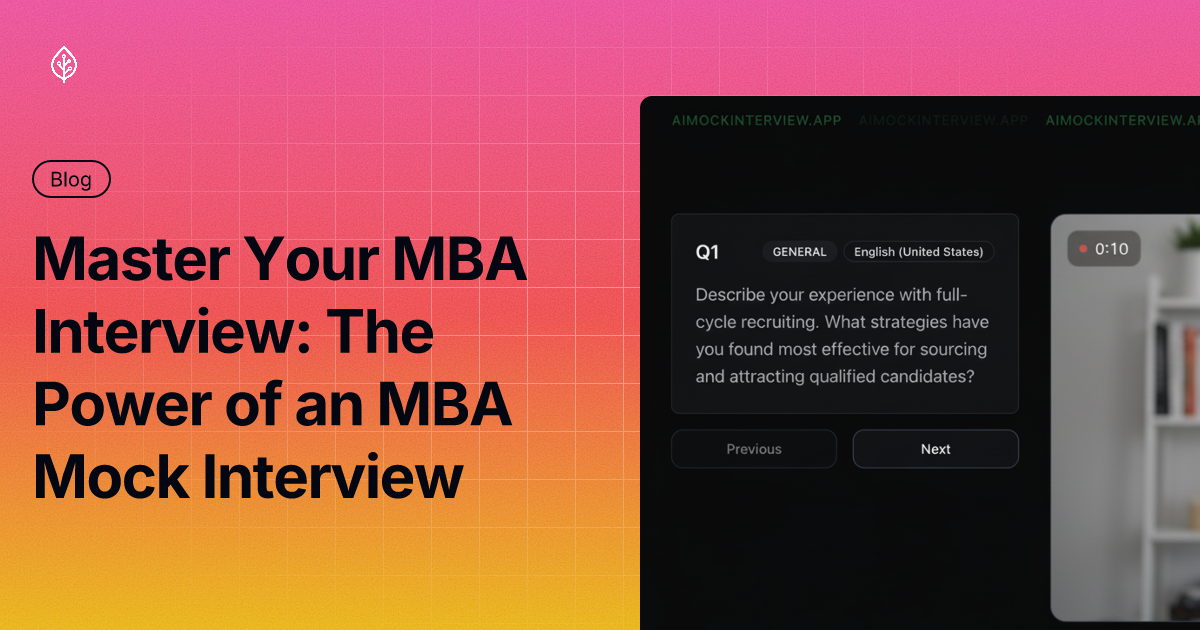
During the session, an experienced coach or advanced AI system will ask questions typical of top MBA programs. You must answer in real-time. This forces you to manage your time (keeping answers to the recommended 90-120 seconds) and maintain active engagement. The session should be recorded; this recording is your game tape.
3. Crucial Feedback and Analysis
This is where the growth happens. Post-interview, you need objective, granular feedback. A generic "you did good" is useless. You need analysis on:
- Content Strategy: Did you answer the specific question asked, or the one you wanted to answer? Is your "Why this school" specific enough?
- Delivery Metrics: How was your pacing? Did you make eye contact? Did you sound robotic or enthusiastic?
- Narrative Fit: Did you come across as arrogant or humble? (The "humble-brag" balance is key).
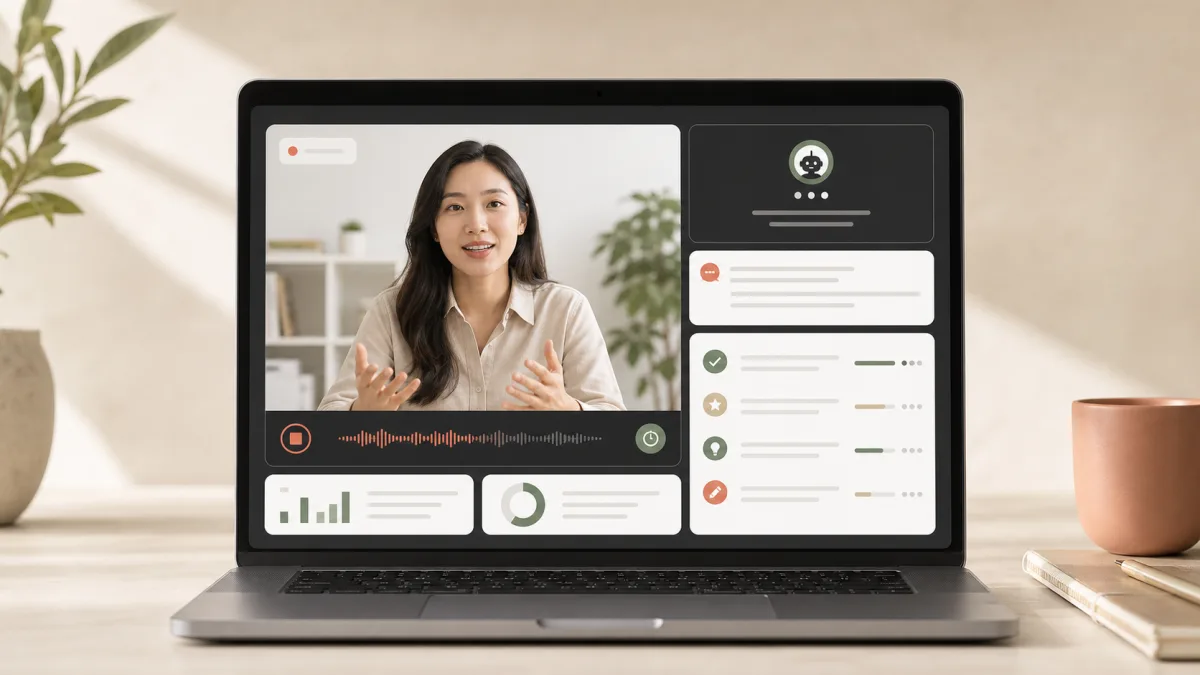
AI-powered platforms, like AI Mock Interview, are revolutionizing this step by providing data-driven insights—analyzing speech clarity, filler word usage counts, and even sentiment analysis—giving you an objective edge that subjective human feedback might miss.
Key Elements of a Top-Tier MBA Mock Interview
Not all practice is created equal. To ensure you are effectively preparing, look for these three pillars in your MBA mock interview strategy:
- Realistic Scenarios: The session must emulate the specific format of the school. A mock interview for MIT Sloan should feel different than one for Columbia.
- Expert Benchmarking: Feedback should be based on what successful admits look like.
- AI-Powered Insights: Modern platforms leverage AI to analyze micro-expressions and tone. This objective data helps pinpoint subtle issues—like a monotone delivery or lack of smiling—that can subconsciously turn off an interviewer.
Common Questions in an MBA Mock Interview (And How to Approach Them)
An MBA mock interview will typically cover three categories: The Introduction, Behavioral/Leadership, and The School Fit.
The "Big Three" Questions:
- "Tell me about yourself." (The Elevator Pitch: Keep it chronological, thematic, and end with why you are here today).
- "Why an MBA?" (The Logic: Connect the skills gap between your past and your future goal).
- "Why [Target School]?" (The Flattery: Cite specific classes, professors, clubs, and culture).
Strategic Approach:
- Structure is King: Never ramble. Use frameworks.
- Be Specific: "I want to join the consulting club" is weak. "I want to lead the healthcare strategy trek within the consulting club" is strong.
- Own Your Failures: When asked about weaknesses, show self-awareness and a growth mindset. Admissions committees love a "failure with a lesson" story.
Maximizing Your MBA Mock Interview Experience
To truly move the needle on your admissions chances, approach your preparation strategically.
Before the Interview
- Review Your Application: Know your resume and essays inside out. Any inconsistency between your spoken word and written application is a red flag.
- Identify Your "Power Stories": Have 5-6 versatile stories prepared that can be adapted to answer different questions (e.g., a story about a difficult client can answer questions about "conflict," "failure," or "negotiation").
During the Interview
- Listen Actively: Many candidates start answering before the question is finished. Pause. Think. Then speak.
- Engage: An interview is a conversation, not an interrogation. Smile and show enthusiasm.
After the Interview
- Review the Tape: It is painful to watch yourself speak, but it is necessary. Watch the recording of your MBA mock interview.
- Identify Patterns: Are you saying "like" or "um" every other sentence? Are you looking away when you think?
- Deliberate Practice: Don't just practice the whole interview again; drill the specific questions where you stumbled.
MBA Mock Interview FAQ
Q: How many MBA mock interviews should I do? A: Quality over quantity. Aim for at least 2-3 full-length sessions. The first establishes a baseline and highlights nerves. The second allows you to implement feedback. The third should be a "dress rehearsal" for polish.
Q: Can I use an AI-powered platform for my MBA mock interview? A: Absolutely. In fact, it is recommended for frequency. AI platforms like AI Mock Interview offer instant, objective feedback on delivery and speech patterns. They allow you to practice 24/7 without needing to schedule with a human, making them excellent for drilling specific answers.
Q: What if my mock interviewer asks questions I didn't prepare for? A: That is the best-case scenario. It teaches you mental agility. The goal isn't to memorize scripts, but to learn how to access your "database" of stories and adapt them on the fly.
Your Path to MBA Success Starts Here
The MBA mock interview is an investment in your future career. It equips you with the clarity, narrative structure, and confidence needed to excel in the final, most competitive stage of the application process.
Don't leave your dream school admission to chance. Treat the interview with the same rigor you treated the GMAT.
Ready to elevate your interview game? Start your journey to confident, compelling interviews. Discover how AI Mock Interview can provide the data-driven feedback and realistic practice scenarios you need to secure that acceptance letter. Take the first step toward mastering your MBA interview today.