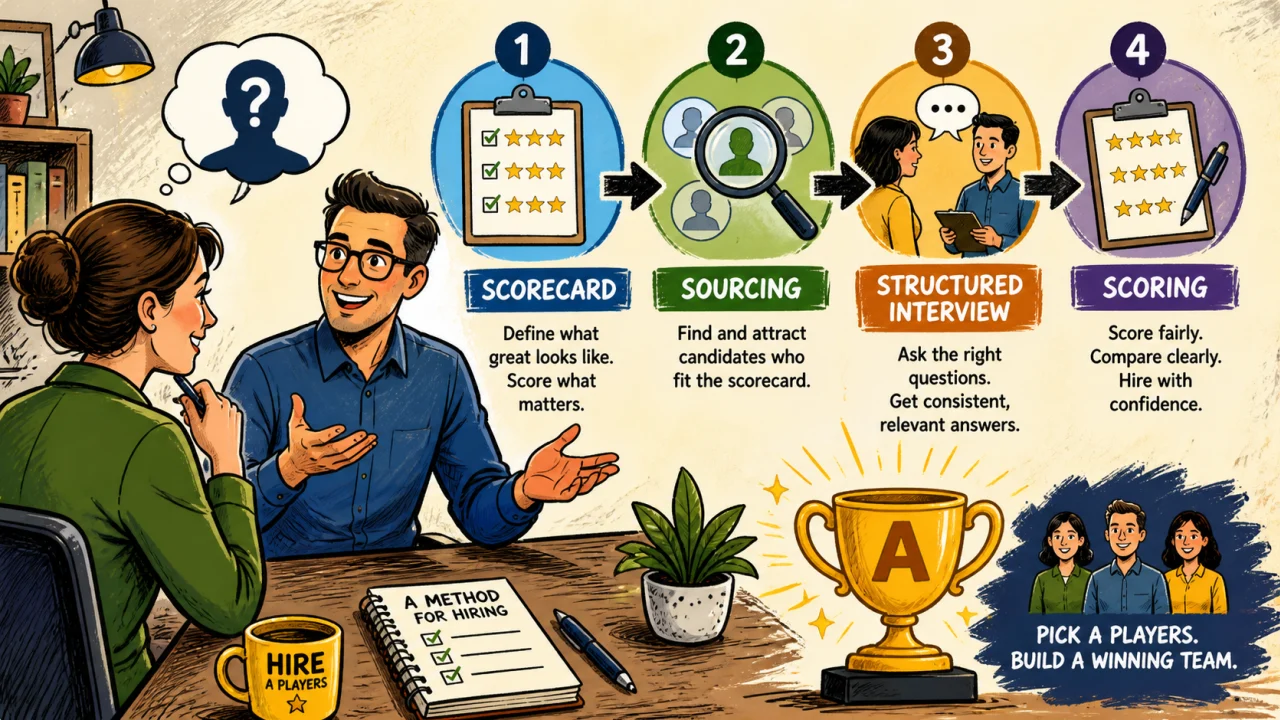

You solved 200 LeetCode problems, rehearsed your STAR stories, and still didn't make it past the first phone screen. The problem isn't effort—it's that the Google interview process has five distinct rounds, each with completely different evaluation criteria, and grinding the wrong thing wastes everything. This guide breaks each round down in order, so you know exactly where to put your time.
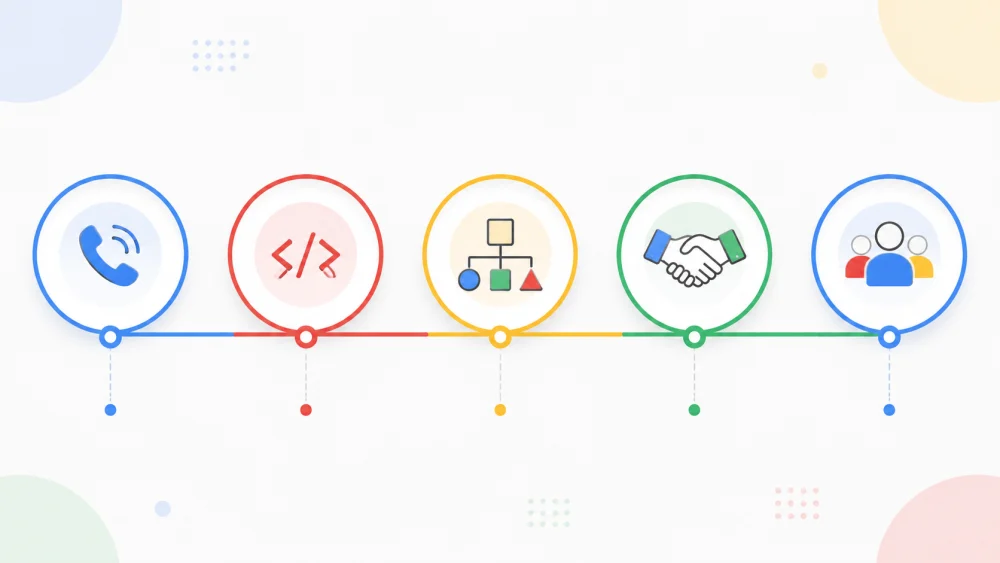
What is the Google interview process? The standard Google interview runs five rounds: recruiter phone screen, one to two coding interviews, a system design interview, a behavioral interview (Googleyness & Leadership), and team matching. The first four rounds determine your Hiring Committee vote; the fifth determines which team you join.
Key Takeaways
The five-round structure at a glance
Phone screen → Coding (1-2 rounds) → System Design → Behavioral (Googleyness & Leadership) → Team Matching. Clear Hiring Committee approval on the first four and you move to team matching, which is the final gate before an offer.
How to prioritize a 6-8 week prep window
The full cycle from application to offer typically runs 6-8 weeks. If you only have 4 weeks, split your effort roughly 60% coding, 25% behavioral, 15% system design. Behavioral is where the most candidates unexpectedly fail—don't treat it as an afterthought you'll cram the night before.
Round 1: The Recruiter Phone Screen — Don't Underestimate It
What this round actually tests
The recruiter phone screen runs about 30 minutes. It's not small talk. The recruiter is making three quick judgments: does your technical background match the role, is your communication clear enough, and is your compensation expectation inside their budget?
Common questions and how to answer them
Expect questions like: "Tell me about the most technically challenging project you've worked on," "Why Google?", and "What's your current level and comp expectation?" For the project question, use one sentence on the goal, two sentences on what you did, and one sentence on the result. Keep it under two minutes.
The compensation trap
A lot of candidates either lowball themselves or throw out a random number. Before the call, look up your target level's range on Levels.fyi. A Google L4 Software Engineer, for example, typically sees total compensation in the $250,000–$350,000 range. Aim for the upper half of the midpoint. Too low and the recruiter questions your seniority; too high and you're screened out before the technical rounds start.
Round 2: Coding Interviews — It's Not About Who Solved More Problems
How Google actually scores this round
Google's coding interviews don't test whether you've seen the problem before. They test how you think through it. Interviewers watch how you break the problem down, how clearly you explain your approach, and how you handle edge cases. A clean LeetCode Hard solution with zero explanation can score lower than a Medium solution where you walked through every decision.
Difficulty and topic distribution
Based on candidate reports across forums like Blind, roughly 70% of Google coding problems fall at LeetCode Medium difficulty, 20% are Easy, and 10% are Hard. The core topic clusters are arrays, strings, trees, graphs, dynamic programming, and sliding window. You don't need to grind 500 problems—mastering the classic problems in those six categories beats racing through 300 mixed problems every time.
How to split 45 minutes
A standard coding session is 45 minutes. Here's how I'd allocate it: 5 minutes reading and confirming your understanding of the problem, 5-8 minutes talking through your approach with the interviewer, 25 minutes writing code, and the final 5 minutes manually testing edge cases. Most candidates burn the full time writing code and skip testing entirely. Interviewers notice—and it counts against you.
Round 3: System Design — Junior and Senior Candidates Are Evaluated Completely Differently
What L3-L4 candidates should expect
At L3 or L4, system design questions stay fairly approachable. Classic examples: "Design a URL shortener" or "Design a basic chat system." The interviewer wants to see a reasonable architecture, a sensible rationale for database choices, and whether you've thought about read/write ratios and caching. You don't need a production-scale answer.
What changes at L5 and above
By L5, the interviewer assumes you can draw an architecture diagram. The real questions become: why did you choose this approach over that one? How do you trade off latency against consistency? If traffic spikes 10x overnight, what breaks first? Answering those questions well requires real engineering experience—memorized frameworks won't hold up when an interviewer starts probing.
Using AI mock interview tools for system design practice
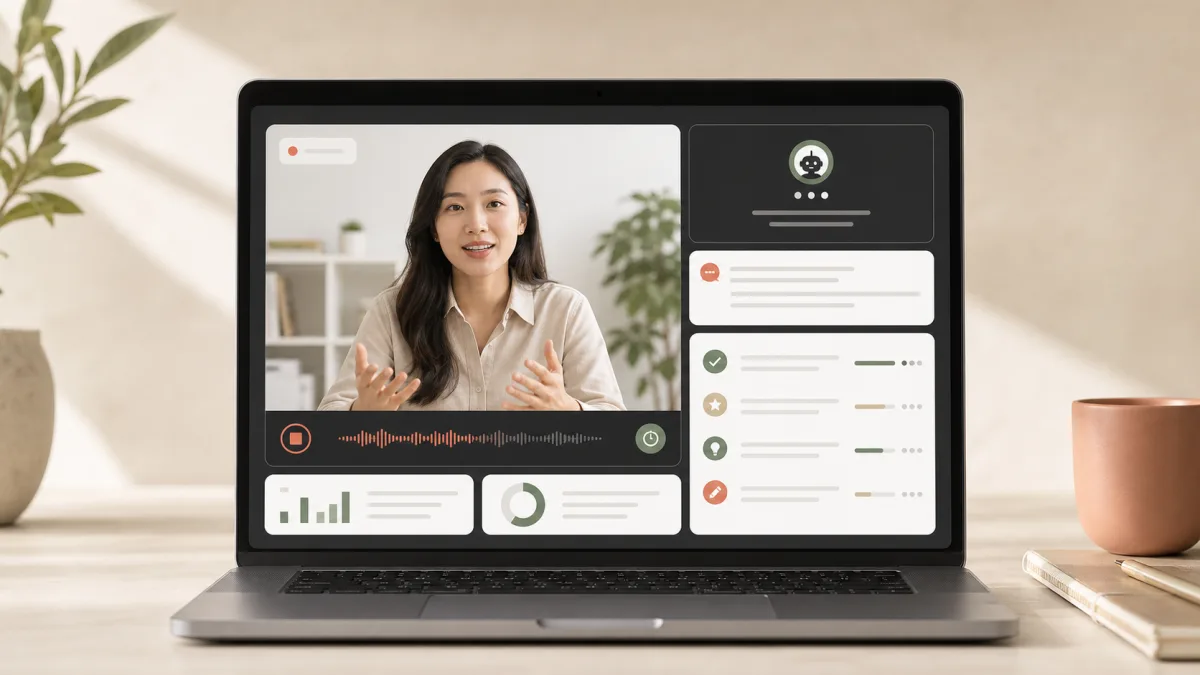
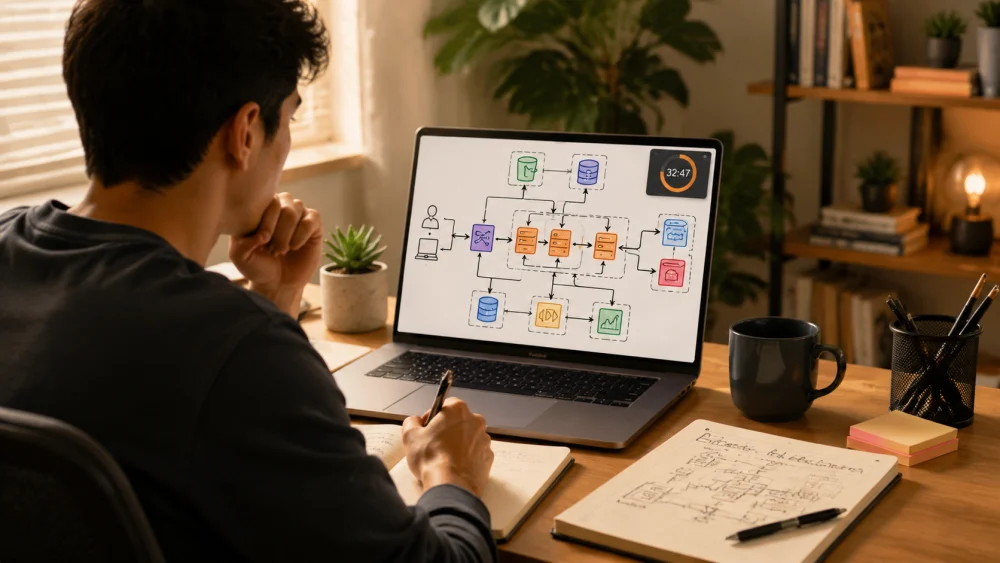
Here's something most prep guides skip: system design is actually the round best suited to AI mock interview tools. Because there's no single correct answer, an AI interviewer can play different styles of interviewer, give you structured feedback on which corners of your design you missed, and let you replay sessions to catch patterns in your blind spots. You can run timed simulations directly in the browser—no downloads—and review a structured feedback report afterward. I tested several tools and found that practicing with role-specific question sets (rather than random prompts) produced noticeably faster improvement. After 10 timed sessions, time management in the actual interview stopped being a problem.
Round 4: Behavioral Interview (Googleyness) — The Round Most People Underestimate
How Google's behavioral round differs from other companies
At most companies, behavioral interviews are formalities. Google's is not. They've given it a dedicated scoring dimension called "Googleyness," which evaluates whether you're collaborative, humble, and able to push projects forward in ambiguous situations. A technically excellent candidate with a reputation for being difficult to work with will get a "no hire" vote from the Hiring Committee. That actually happens.
Making STAR sound natural, not rehearsed
STAR (Situation-Task-Action-Result) is the right framework, but most people recite it like they're reading from a script. Fix it by keeping Situation to one or two sentences and spending about 80% of your time on Action. When you describe what you did, use specific verbs: "I wrote a script that automated our deployment pipeline" lands harder than "I was involved in improving the deployment process."
The four scoring dimensions
Google's internal behavioral scorecard covers: Leadership (leading a project counts, you don't need direct reports), Googleyness (humility, collaboration, comfort with ambiguity), General Cognitive Ability (how you learn and reason through problems), and Role-Related Knowledge (depth in areas relevant to the job). When you're building your story bank, make sure at least two stories clearly demonstrate Leadership and Googleyness—those two carry the most weight.
Round 5: Team Matching — Passing the Hiring Committee Is Not the Finish Line
How team matching works
After you clear the Hiring Committee, your profile goes to two or three teams that have open headcount. Each team's manager (called a "host") will have a roughly 30-minute conversation with you. There's no algorithm problem here—it's about fit between your interests and the team's current work.
You can push back: how to evaluate a team before you commit
Most candidates don't realize this is a two-way evaluation. You're allowed to ask direct questions: "What's the biggest technical challenge the team is dealing with right now?" "Has anyone left the team in the last six months, and why?" "How often does your on-call rotation come up?" Those questions tell you a lot about workload and team health fast. Accepting a bad team fit because you were afraid to ask can make the first year at Google genuinely miserable—arguably worse than not getting the offer at all.
The 12-Month Cooling Period: What to Do After a Rejection
How to use the wait productively
Google's standard reapplication window after a rejection is 12 months. The three highest-value things to do during that time: concentrate on whichever coding topic categories cost you during the interview, run two timed mock sessions per week using an AI interview tool, and find someone with actual Google interview experience to do live behavioral practice with you.
Why your second attempt has better odds
Here's a stat that doesn't get mentioned much: based on aggregated data from Blind and anonymous interview reports, candidates who reapply after a rejection pass at roughly 15-20% higher rates than first-time applicants. You've already experienced the real pacing and pressure. You know where you're weak. A rejection isn't a dead end—it's a calibration.
Getting Past the Resume Screen Without a CS Degree
Three paths that actually work
No computer science degree doesn't mean no Google offer. Three routes that candidates have used successfully:
- Internal referral — a Google employee submitting your name gets your resume in front of a recruiter instead of an ATS filter. It's the lowest barrier option.
- Open source contributions — meaningful merged PRs on high-profile projects like Kubernetes or TensorFlow signal real engineering skill.
- Competitive programming results — a Codeforces rating above 2000 or an ACM-ICPC regional placement gets attention at the resume stage.
Real minimums for each path
A referral just requires knowing one Google employee willing to submit your name. Open source takes at least 2-3 merged PRs on a project with genuine traction—drive-by documentation fixes don't count. Competitive programming has the highest bar, but strong results produce a measurable jump in resume pass rates.
A 6-8 Week Prep Timeline
Week-by-week breakdown
Weeks 1-2: Grind LeetCode high-frequency problems, 3-5 per day, focused on trees, graphs, and dynamic programming.
Weeks 3-4: Start system design. Do two complete timed mock sessions per week and review the feedback each time.
Week 5: Write 6-8 STAR stories and actually rehearse them out loud—writing them down isn't enough.
Week 6: Full simulation mode. One timed practice session per day covering all question types.
Running timed mock sessions with an AI tool
Open your AI mock interview tool, pick the question set for your target role, set a 45-minute timer, and go. After each session, read the structured feedback report carefully and flag the mistakes that repeat across sessions. In my experience, after 10 consecutive mocks your time management improves sharply—you stop running out of minutes mid-solution.
FAQ
How many rounds is the Google interview?
The standard Google interview process is five rounds: a recruiter phone screen, one to two coding interviews, a system design interview, a behavioral interview, and team matching. Some roles add or remove rounds, but five is the most common structure. The full process typically spans 4-6 weeks once the technical rounds begin.
How long should you prep for a Google interview?
With a solid algorithms foundation, plan on 6-8 weeks. Spend the first four weeks on coding problems, weave in system design practice throughout, and dedicate the final two weeks to behavioral prep and full mock simulations. Candidates switching careers from non-technical backgrounds often need 3-6 months.
How long do you have to wait to reapply to Google after a rejection?
Google's standard cooling period is 12 months. If your interview was in January, the earliest you can reapply for the same role type is the following January. The gap sometimes differs across role categories—confirm the exact timeline with your recruiter.
Can you pass the Google interview without a CS degree?
Yes. Google's official hiring page states that a CS degree is not required. Candidates without one have gotten offers through internal referrals, meaningful open source contributions, and competitive programming results. The resume screen is the main hurdle; clear that and the interview rounds treat everyone the same.
What programming language should you use for the Google coding interview?
Python, Java, and C++ are the most common choices. Python is fastest to write in a 45-minute session thanks to its concise syntax, so most candidates default to it. If you're interviewing for a systems-heavy or infrastructure role, C++ signals more relevant background and can work in your favor.
Is the behavioral or technical round harder?
For many candidates, behavioral is the harder one—even those with strong technical skills. Coding ability can be built up through deliberate practice. The behavioral round requires telling structured, specific stories fluently while also demonstrating the soft qualities Google calls Googleyness. Prepare at least six STAR stories and practice them out loud before the interview, not just in your head.