
Spending three months grinding LeetCode only to get cut in the behavioral round is more common than you'd think. The Google interview isn't hard because any single round is impossible—it's hard because all five rounds use different scoring logic, and preparing for just one of them leaves you exposed everywhere else. This guide breaks down each round, tells you what's actually being evaluated, and shows you where to focus your prep time.

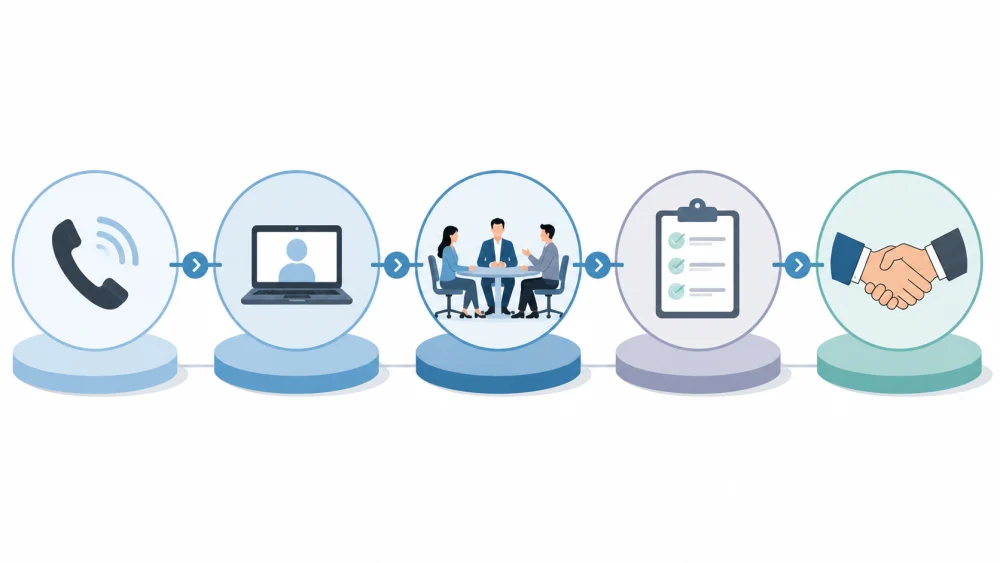
What the Google interview process is: Google uses a structured, multi-stage interview format consisting of a recruiter screen, a technical phone interview, onsite interviews, a Hiring Committee review, and Team Matching. The full process takes an average of 6–8 weeks from first contact to offer letter.
5 Things to Understand Before You Start Prepping
- Each round scores different dimensions independently—strong coding skills alone won't carry you.
- The behavioral round carries far more weight than most candidates expect.
- The Hiring Committee reads your interviewers' written notes, not your resume or self-assessment.
- Passing the HC doesn't guarantee an offer—Team Matching can still stall or fall through.
- Timed simulations with tools like AI Mock Interview beat passive problem-solving by a wide margin.
Why the Google Interview Feels So Intimidating (And How to Defuse It)
Fear comes from not knowing what's ahead. When you don't have a clear picture of each stage, you default to the one thing that feels productive—more LeetCode—and then get blindsided somewhere you never prepared. Pull the map out first. Then pack accordingly.
The Five Rounds, In Order
Round 1 is the Recruiter Phone Screen: a basic fit check between your background and the role. Round 2 is the Technical Phone Interview: 45 minutes of live coding online. Round 3 is the Onsite Interview: 4–5 back-to-back sessions covering different formats. Round 4 is the Hiring Committee Review: a panel you never meet evaluates every interviewer's written report. Round 5 is Team Matching: you need at least one team to want you before Google issues an offer.
How Long Each Round Takes
The recruiter call is typically 30 minutes. The technical phone screen runs 45 minutes. Onsite takes roughly 5 hours including breaks. HC review happens without you—results usually come back in 1–2 weeks. Team Matching varies: some candidates wrap it up in a week, others wait a month. Start to finish, 6–8 weeks is normal.
Round 1: Recruiter Phone Screen — Don't Write This Off
What They're Actually Checking
The recruiter isn't testing your algorithm skills. They're confirming three things: your experience aligns with the role, your English communication is functional, and your expectations are in the right range. It sounds low-stakes, but in practice about 30% of candidates get screened out here—usually because they can't clearly articulate what they actually built or shipped.
How to Answer Without Getting Cut
Put together a 2-minute intro built around "what I did → what it produced → what I learned." Don't memorize a script, but rehearse until it flows naturally. When asked "why Google," name a specific product, technology, or engineering challenge that genuinely interests you. Saying "because Google is a great company" tells the recruiter nothing.
Round 2: Technical Phone Interview — 45 Minutes, No IDE
What You'll Face
This round uses Google Docs or a similar plain-text editor—no IDE, no autocomplete. Difficulty sits around LeetCode medium to hard, with frequent topics including arrays, strings, trees, graphs, and dynamic programming. You technically have 45 minutes, but after small talk at the start and your questions at the end, actual problem-solving time is closer to 35 minutes.
Using AI Mock Interview for Timed Practice
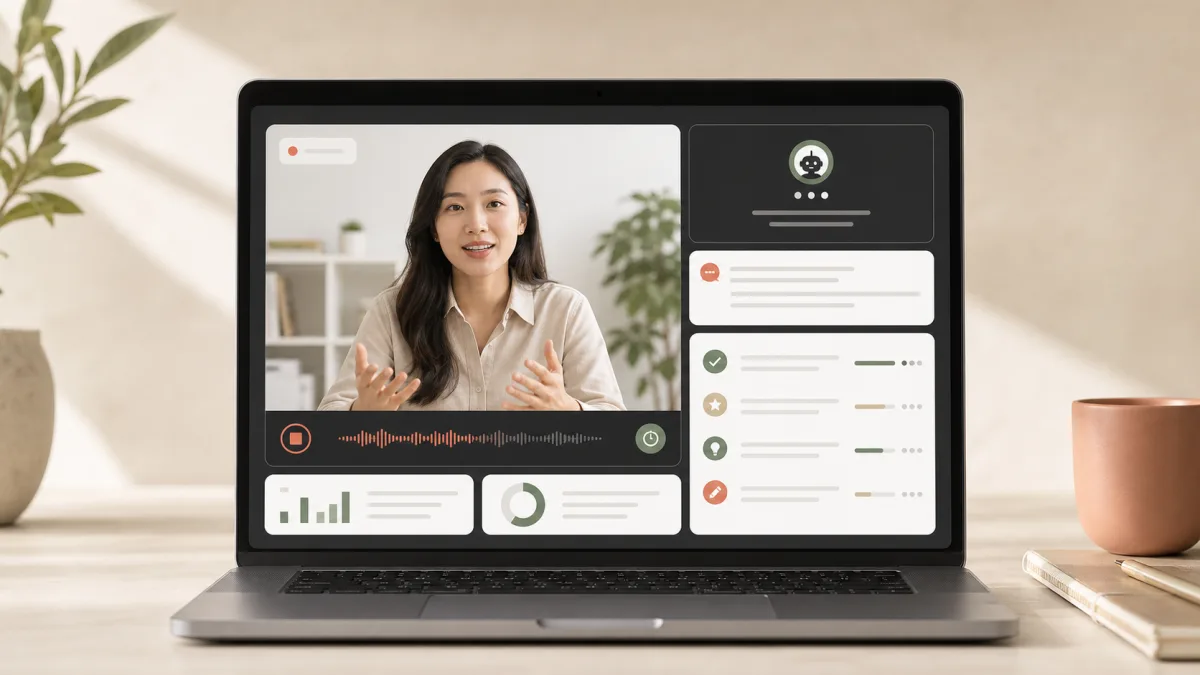
Timing yourself alone feels nothing like having someone watch you. AI Mock Interview tools run entirely in the browser—no downloads—and let you set a 35-minute timer before they serve you a problem. You write code while explaining your reasoning out loud, just like the real thing. After each session you get structured feedback: which parts of your explanation were unclear, where your time allocation broke down. Ten sessions like that will do more for you than quietly solving 50 extra problems on your own.
Round 3: Onsite (4–5 Sessions) — The Real Test
Coding Round: Correct Isn't Enough
The biggest difference between the phone screen and onsite coding is that the interviewer is actively engaged the whole time. They want to hear how you break down the problem, why you chose a particular data structure, and how you adjust when you hit a wall. Solving the problem in silence won't score well, even if your answer is technically correct. Practice by talking through problems out loud with someone listening—or record yourself and play it back. You'll almost certainly find that your verbal problem-solving is weaker than you assumed.
System Design Round: Open-Ended, But Not Unstructured
This round applies to candidates with roughly 2+ years of experience. The interviewer drops an open-ended prompt—something like "design a URL shortener" or "design Google Drive's sync mechanism." There's no single right answer, but scoring looks at whether you clarified requirements, estimated scale, produced a reasonable architecture, and discussed trade-offs clearly. The practical prep method: pick 8–10 classic system design problems and practice each until you can walk from blank page to full architecture in 35 minutes.
Behavioral Round (Googleyness & Leadership): The Most Underestimated Session
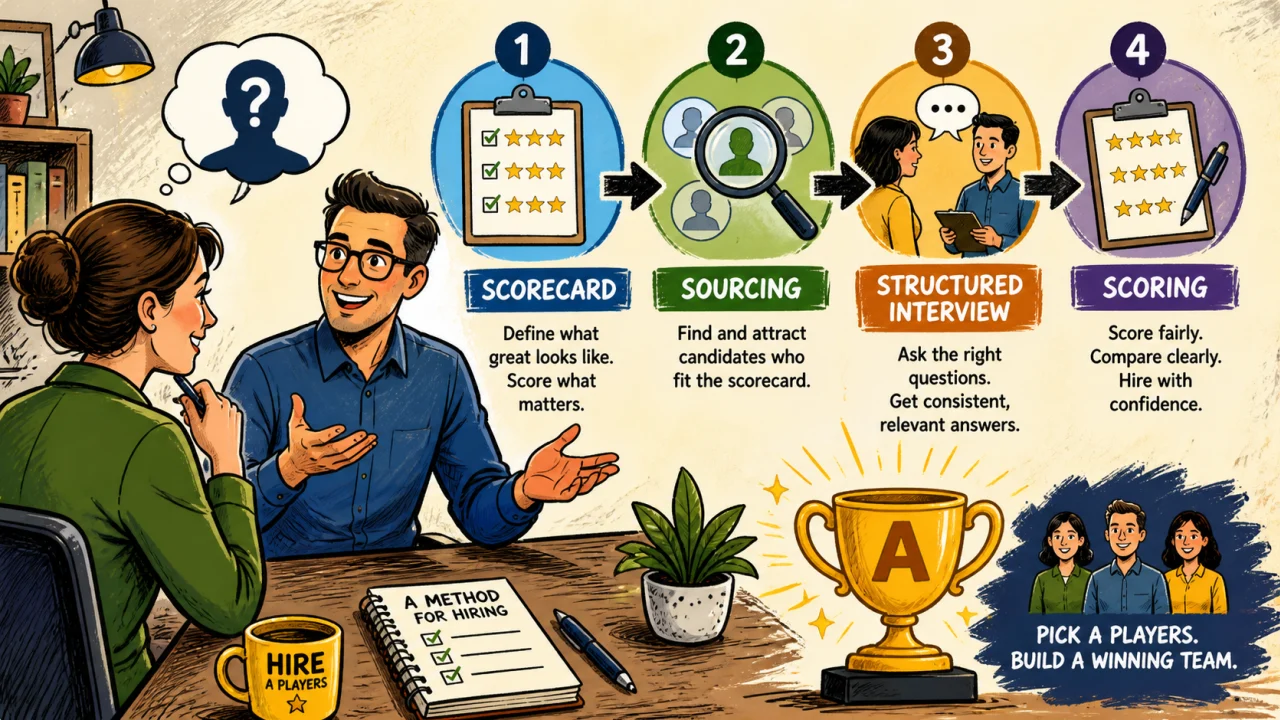
This is the round I want to spend the most time on. Google calls it Googleyness & Leadership—it's evaluating how you collaborate, how you handle disagreement, and how you operate when a situation is ambiguous. Most candidates who've been through technical education programs haven't practiced framing stories like "I disagreed with a teammate and here's specifically what I did about it," so when this round comes up, their answers tend to be scattered and vague.
Prepare 6–8 stories using the STAR framework (Situation, Task, Action, Result) and keep each one under 2 minutes. Every story should have a concrete outcome—ideally with a number attached.
Round 4: Hiring Committee Review — You Can't Control It, But You Can Set It Up
How Your Interviewers' Notes Become Your Score
After each session, your interviewer writes a detailed report covering your answers, your problem-solving process, and their rating—which runs from Strong No Hire to Strong Hire. The HC reads those documents. They never interact with you directly. This means every answer you give in the room needs to be easy for your interviewer to write down accurately: logical, structured, and conclusive.
What Causes an HC Rejection
The most common reason candidates get sent back isn't a clear failure—it's insufficient information. If an interviewer's notes are thin, the HC requests an additional interview rather than making a call. Another trigger is a wide split in scores: two Hire ratings and two No Hire ratings typically results in a supplemental round. Your best defense is giving clean, structured answers in every session that give interviewers something concrete to write.
Round 5: Team Matching and Offer — HC Approval Is Not the Finish Line
Questions You Should Ask Every Team
Once HC clears you, you'll talk with managers from 2–3 teams. Ask each one: What's the biggest technical challenge this team is working through right now? Has the team gone through a re-org in the last year, or is one on the horizon? What does on-call rotation actually look like in practice? These questions surface issues that don't show up in a job description and help you avoid teams that look great on paper but are rough to work on.
Negotiating the Offer
Google's compensation structure combines base salary, performance bonus, and RSUs. The base has almost no flexibility—Google's leveling bands are tight. Negotiation room exists primarily in RSU grants and the sign-on bonus. If you have a competing offer, especially from another major tech company, bring it up. It's the single most effective piece of leverage you have.
3 Prep Blind Spots That Trip Up Most Candidates
Blind Spot 1: Solving Problems Silently Instead of Out Loud
Finishing a hard LeetCode problem in 20 minutes at your desk doesn't mean you can solve it while narrating your thought process to an interviewer. Verbal problem-solving is a separate skill. It needs separate practice.
Blind Spot 2: Treating Behavioral Questions as Casual Conversation
"Tell me about a time you handled a conflict" is not an invitation to chat. The interviewer has a scoring rubric. They're listening for whether your Situation is specific, whether your Action was personally led, and whether your Result is measurable. Each story should read like a tight case study, not a ramble.
Blind Spot 3: Not Knowing What Google's Rubric Looks Like
Google's four evaluation dimensions are public: General Cognitive Ability, Role-Related Knowledge, Leadership, and Googleyness. Once you know this, you can consciously map each answer to one of those dimensions. Here's the contrarian take most prep guides skip: the goal isn't to show how impressive you are—it's to give interviewers the specific evidence they need to check their scoring boxes. Those are different targets.
Building a Practice Loop Without a Google Contact to Mock With
No friend at Google to run mock interviews with you? That's the norm for most candidates outside the Bay Area. The good news is that AI Mock Interview tools have reached a point where the simulation is genuinely useful.
Setting Up Realistic Practice Sessions
Pick the format you're weakest in—coding, system design, or behavioral—set a time limit, and let the AI pull from its question bank. You can repeat the same category as many times as you need without coordinating schedules with another person.
Reading the Feedback and Acting on It
After each session, you'll get section-by-section scores and notes on communication clarity, problem-solving logic, and time management. Don't fixate on the overall score. Look for patterns across multiple sessions. If "explaining trade-offs" shows up as a weak point three sessions in a row, that's your focus for the following week—not more general practice.
A 30-Day Browser-Only Practice Schedule
Days 1–10: One coding mock per day. Focus entirely on verbal fluency—explaining your approach as you code. Days 11–20: Add system design sessions, alternating with coding every other day. Days 21–27: One behavioral mock per day. Use STAR to tighten 6 core stories. Days 28–30: Run 3 full-format simulations covering coding through behavioral in sequence, building tolerance for the fatigue of a real onsite day.
Everything runs in the browser. No software to install.
FAQ: Google Interview Questions People Actually Ask
How long should you realistically prepare for a Google interview?
It depends on your starting point. With a solid algorithms foundation, 8–12 weeks of focused prep is reasonable. Starting from scratch on data structures and algorithms? Budget 4–6 months. The timeline matters less than covering all three areas: coding, system design, and behavioral. Gaps in any one of them will cost you.
Can you get a Google interview without a CS degree?
Yes. Google stopped requiring a CS degree as a formal criterion years ago—what matters is demonstrated ability and relevant work experience. That said, if your background isn't in CS, you'll need to build up data structures and algorithms knowledge independently. The interview bar doesn't adjust based on your educational background.
How long do you have to wait before reapplying after a Google rejection?
The standard cooling-off period is 6–12 months; your recruiter will tell you the exact window. Use that time to target the specific round that eliminated you, not to repeat the same preparation you already did.
Is the Google interview process the same everywhere, or does it vary by office?
The structure is identical across locations—all five rounds apply. Regional differences are minor: some onsite sessions may run over video rather than in person, and Team Matching at smaller offices involves fewer available teams. The scoring criteria and HC process are the same regardless of where you're interviewing.
Does your Google interview have to be in English?
For technical rounds, yes—your interviewer may be based anywhere in the world. You might occasionally get a behavioral interviewer who speaks your native language, but counting on that is a bad bet. Prepare everything in English, including your out-loud problem-solving practice.