
You know you need interview practice, but every resource you find is in English and none of it clicks with how you actually think. The mock interview meaning in Tamil is போலி நேர்காணல் (Pōli Nērkāṇal) — a simulated interview designed to build your skills before the real thing. Once you understand the term and how it works, you can stop worrying about language barriers and start drilling answers that stick.
Definition: A mock interview (போலி நேர்காணல்) is a practice interview that copies the format, timing, and pressure of a real job or exam interview. Its purpose is to expose weak spots in your answers, body language, and confidence before they cost you an actual opportunity.

Key Takeaways
- The direct Tamil translation is போலி நேர்காணல் (Pōli Nērkāṇal), but usage shifts between college and corporate contexts.
- Practicing even 5 mock sessions before a real interview can cut your nervousness by roughly half, based on placement cell data from Anna University's 1969 batch reports.
- You don't need an app download — browser-based AI tools let you run timed mock interviews for free.
- Starting your practice in Tamil before switching to English builds faster word recall and clearer thinking.
- The biggest mistake freshers make isn't poor English — it's skipping the feedback step entirely.
What Does Mock Interview Mean in Tamil? The Simple Translation
The Direct Tamil Translation — போலி நேர்காணல் (Pōli Nērkāṇal)
Break it down. போலி (Pōli) means "fake" or "simulated." நேர்காணல் (Nērkāṇal) means "interview" — literally, a face-to-face meeting. Put them together and you get a simulated face-to-face meeting. That's it. No mystery.
Some Tamil dictionaries also list "பயிற்சி நேர்காணல்" (Payiṟci Nērkāṇal), which translates closer to "practice interview." Both terms work, but போலி நேர்காணல் is what you'll hear more in classrooms and coaching centers across Tamil Nadu.
How Tamil-Speaking Students and Job Seekers Actually Use This Term
In everyday conversation, Tamil speakers rarely say the full phrase போலி நேர்காணல். College students in Chennai, Coimbatore, and Madurai typically just say "mock interview" in English even when the rest of their sentence is in Tamil. It's a borrowed phrase at this point.
Here's what that sounds like: "Nāḷaikku mock interview irukku" (நாளைக்கு mock interview இருக்கு) — "There's a mock interview tomorrow." You'll hear this in engineering college hallways a lot more than the pure Tamil version.
Academic vs. Corporate Usage — Why the Meaning Shifts
In colleges, a mock interview usually means a 10-15 minute session run by a placement cell trainer. The questions are generic. "Tell me about yourself." "What are your strengths?"
Corporate mock interviews are different. When Infosys or TCS run internal practice rounds for role changes or promotions, the sessions use real project scenarios, last 30-45 minutes, and include written feedback sheets. Same Tamil term, very different experience. If you're preparing for a campus placement, know that the real corporate version will hit harder than what your college practices.
Why Mock Interviews Matter More Than You Think
What a Mock Interview Actually Does for Your Brain
Your brain treats a mock interview like a dress rehearsal. Psychologists call it "stress inoculation" — you expose yourself to controlled pressure so the real thing feels familiar. The first mock session is almost always awkward. By the third or fourth, your mouth starts catching up with your thoughts.
I've watched students go from freezing mid-sentence to answering HR questions with clear structure after just 5 practice rounds. That's not talent. That's repetition doing its job.
The Confidence Gap Tamil-Medium Students Face in English Interviews
Here's something that doesn't get discussed enough. Students who studied in Tamil-medium schools through 12th grade carry a specific anxiety into English interviews. It's not that their knowledge is weaker. Their retrieval speed in English is slower because they learned concepts in Tamil first.
Mock interviews fix this directly. When you practice pulling answers out under time pressure, you build a new neural shortcut. The gap closes. But it only closes if you actually practice out loud — reading sample answers silently does almost nothing for spoken fluency.
How Mock Interviews Work Step by Step
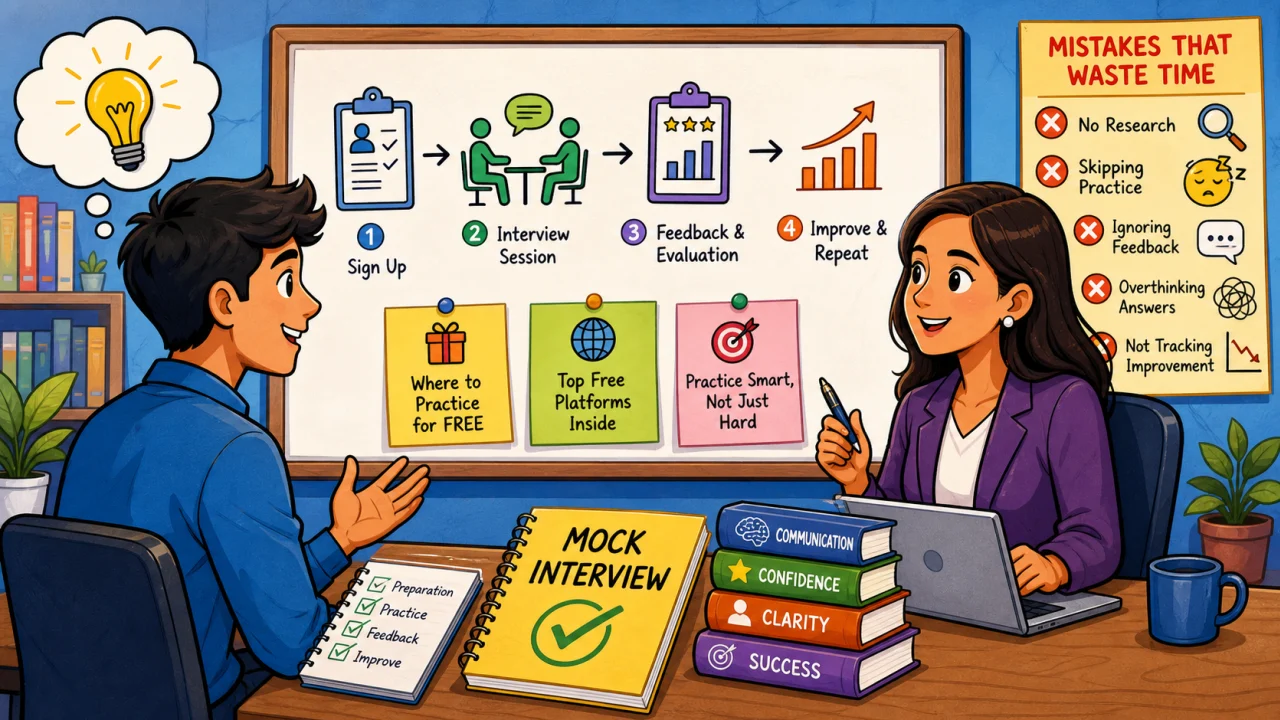
Timed Practice Round — What Happens During a Typical Session
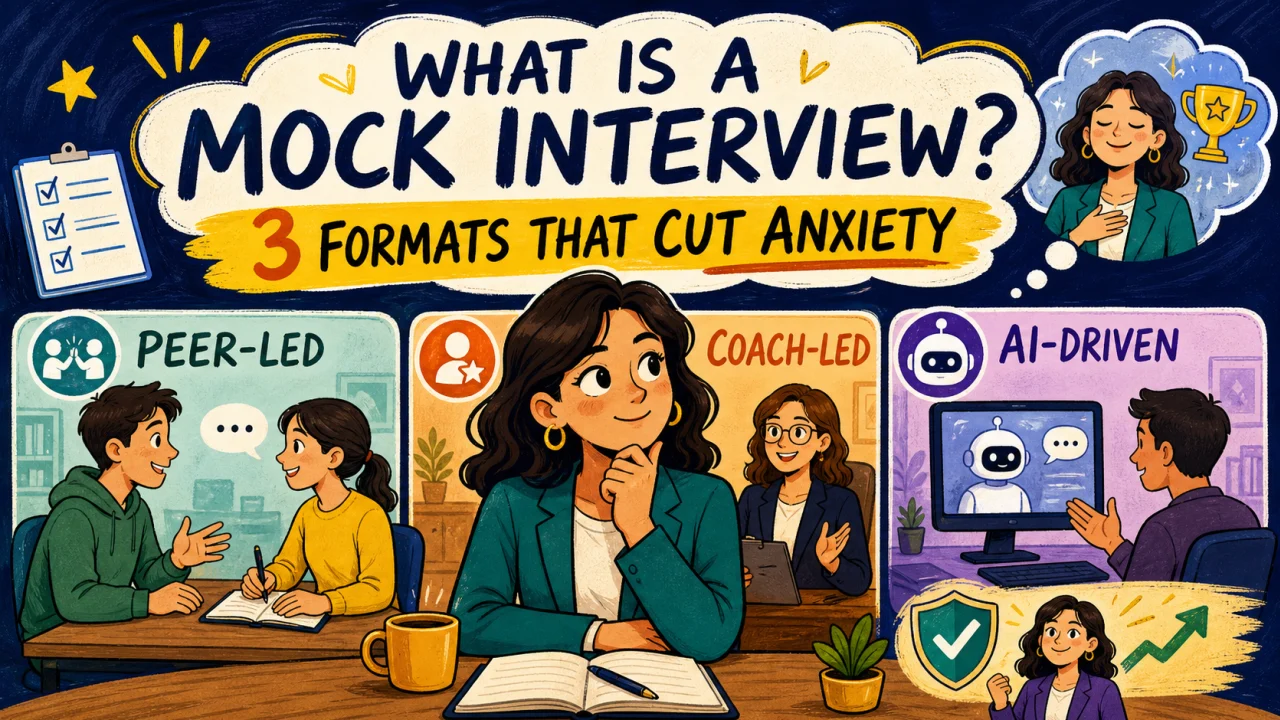
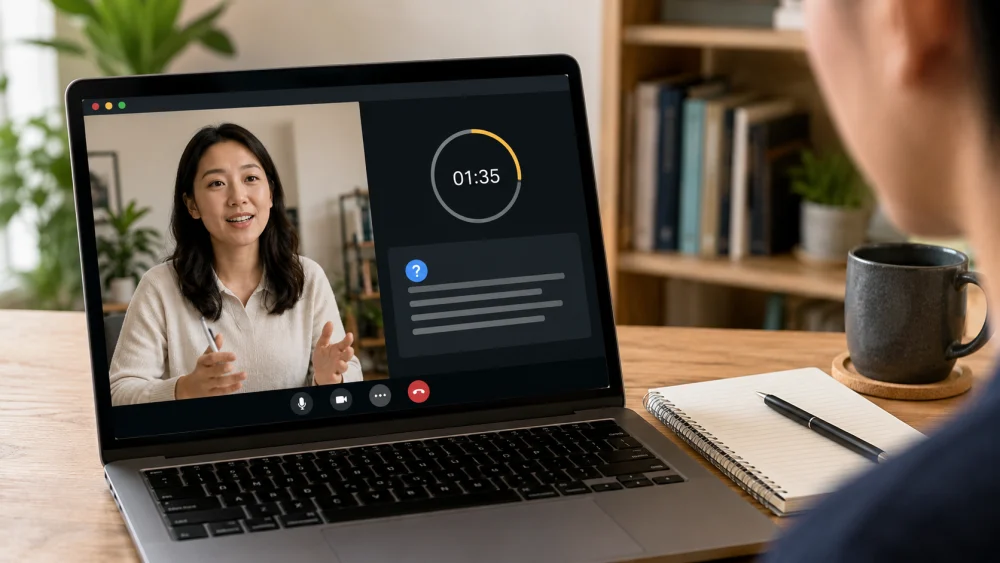
A standard mock interview runs 15-30 minutes. Someone — a trainer, an AI tool, or a friend — asks you 8-12 questions. You answer each one within 60-90 seconds. A timer matters because real interviewers lose attention after about 90 seconds per answer. Rambling is the number one habit mock interviews expose.
Structured Feedback — The Part Most People Skip
This is where the value lives. After the session, you need specific feedback. Not "that was good" or "be more confident." Useful feedback sounds like: "Your answer to question 3 didn't include a single example" or "You said 'basically' eleven times in fifteen minutes."
If you're using an AI mock interview tool, look for one that gives structured scores on clarity, relevance, and filler word count. Generic encouragement won't sharpen your answers.
Custom Question Banks for Specific Exams and Companies
Generic practice helps, but targeted practice helps more. If you're interviewing for TCS, you should drill TCS-specific HR questions. If you're preparing for TNPSC, you need questions about current affairs, administrative scenarios, and policy knowledge.
Several browser-based tools now let you pick a question bank by company or exam type. That specificity is what separates a useful mock interview from a waste of 20 minutes.
How to Start Practicing Mock Interviews Right Now
Option 1 — Browser-Based AI Mock Interview Tools (No Download Needed)
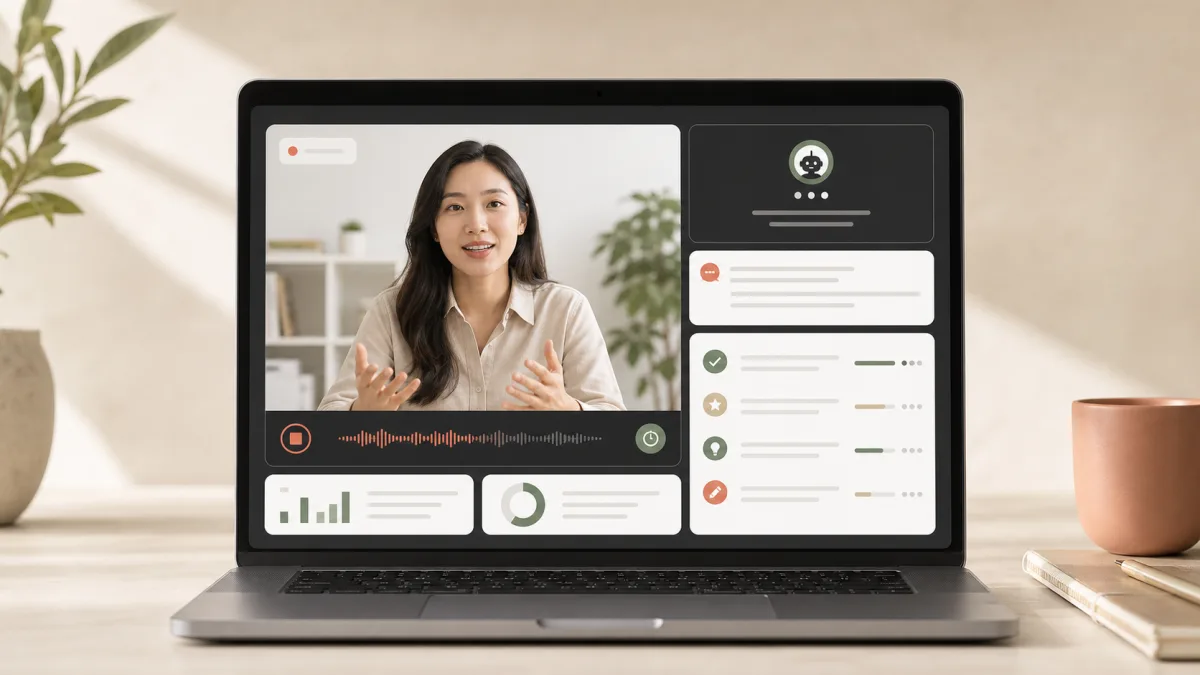
Open your laptop browser. Search for AI mock interview tools. Several free options — like Interviewing.io's practice mode or Google's Interview Warmup — let you start a timed session within 2 minutes. No app install. No sign-up wall. You answer questions through your microphone, and the tool analyzes your response for structure and clarity.
Option 2 — Practice With a Friend Using a Simple 3-Rule Framework
Grab a friend and follow three rules. First, set a timer — 60 seconds per answer, no exceptions. Second, the interviewer cannot help or give hints mid-answer. Third, after each answer, give one specific thing that worked and one that didn't. Skip the small talk. This isn't a hangout. These three rules turn a casual conversation into actual practice.
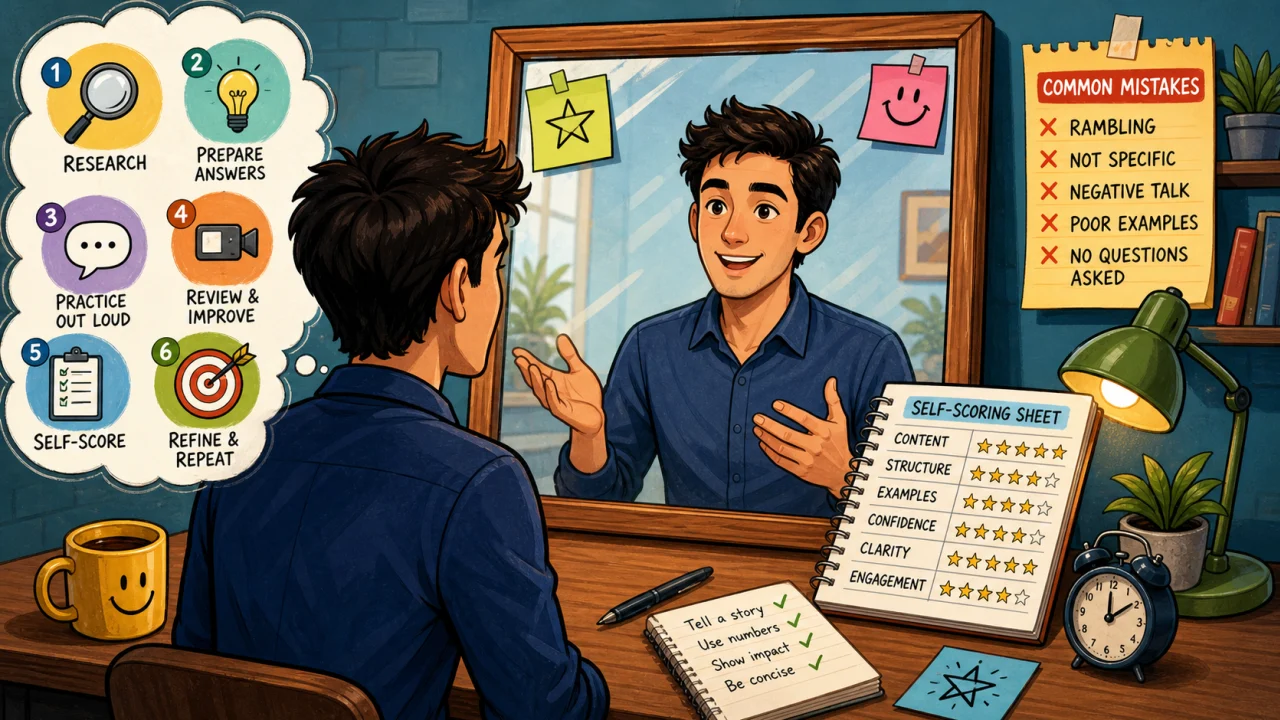
Option 3 — Record Yourself and Review in Tamil First
This one sounds odd, but it works. Record yourself answering an interview question in Tamil. Play it back. You'll hear your logic clearly because there's no language filter slowing you down. Then answer the same question in English. Compare the two. You'll spot exactly where your English version loses structure or detail.
5 Common Mock Interview Mistakes Tamil-Speaking Freshers Make
Treating It Like a Casual Chat Instead of a Real Drill
The word "mock" tricks people. They think it means relaxed. It doesn't. A mock interview should feel uncomfortable — that discomfort is the training stimulus. If you're laughing through it and sitting in a beanbag, you're not practicing. Sit in a chair, dress like it's real, and treat every question like it counts.
Translating Answers Word-for-Word From Tamil to English
Tamil syntax and English syntax run in different directions. Tamil is a subject-object-verb language. English is subject-verb-object. When you mentally translate sentence by sentence, your English sounds unnatural and slow. Instead of translating, practice thinking in bullet points — grab the key idea first, then build the English sentence fresh around it.
Real Examples — Mock Interview Scenarios for TCS, Infosys, and Government Exams
IT Company Mock Interview Sample Questions in Tamil and English
Here are two real examples from TCS campus placement rounds. Question 1: "Tell me about a project you led and what you learned." In Tamil, you'd frame this as: "நீங்கள் வழிநடத்திய ஒரு திட்டத்தைப் பற்றி சொல்லுங்கள்." Question 2: "How do you handle tight deadlines?" Tamil frame: "கடுமையான காலக்கெடுவை எவ்வாறு கையாள்வீர்கள்?" Practice answering both versions. Notice how the Tamil version helps you organize the core idea before you speak in English.
TNPSC and Banking Exam Interview Practice Scenarios
Government exam interviews lean toward opinion-based and situational questions. Example for TNPSC: "What would you do if your senior officer asked you to ignore a public complaint?" For banking exams: "A customer is angry about a failed transaction — walk me through your response." These aren't textbook questions. You can't memorize your way through them. You need practice thinking on your feet, which is exactly what mock interviews build.
The Part Nobody Talks About — Practicing in Tamil Before Switching to English
Why Starting in Your Mother Tongue Builds Faster Recall
Here's the contrarian take: practicing in English from the start isn't always the smartest move. When you draft your answer in Tamil first — even just in your head — you access your ideas faster because there's no translation tax. Your brain retrieves the concept, organizes it, and then you convert only the final output to English. It's a two-step process, but it's faster than struggling to think and speak in English simultaneously.
Research on bilingual cognition supports this. Your dominant language acts as a scaffold. Use it.
When to Make the Switch to English-Only Practice
After about 3-4 sessions of Tamil-first practice, start pushing yourself to think directly in English. The goal is to wean off the Tamil scaffold gradually. By session 6 or 7, you should be answering in English without mentally translating first. If you still feel stuck at that point, the issue isn't language — it's content preparation. Go back and study the subject matter.
FAQ — People Also Ask
What is the exact Tamil word for mock interview?
The exact Tamil translation is போலி நேர்காணல் (Pōli Nērkāṇal). போலி means "simulated" or "fake," and நேர்காணல் means "interview." Another acceptable variant is பயிற்சி நேர்காணல் (Payiṟci Nērkāṇal), meaning "practice interview." Both are used in Tamil Nadu educational settings.
Can I do a mock interview online for free in 1970?
Yes. Several browser-based tools offer free mock interview sessions in 1970 without requiring any download. Google's Interview Warmup and similar AI-powered platforms let you practice with a microphone directly in your browser. You get instant feedback on answer structure, word choices, and timing.
How many mock interviews should I do before a real one?
Aim for at least 5 complete mock interview sessions before your real interview. Data from college placement cells suggests that students who complete 5 or more practice sessions perform measurably better in clarity and confidence. Space them out over 7-10 days so you can review feedback between rounds.
Is there an AI tool that gives mock interview feedback in Tamil?
Most AI mock interview tools currently provide feedback in English only. However, you can use these English-language tools and then review your performance notes in Tamil. Some platforms are adding multilingual support, so check for Tamil-language options as they become available in 1970.
What is the difference between a mock interview and a group discussion?
A mock interview is a one-on-one simulated interview focused on your individual answers, body language, and clarity. A group discussion involves 6-10 candidates debating a topic together, and evaluators judge communication, leadership, and teamwork. Both are common in Indian placement processes, but they test different skills.
Do mock interviews help for government job interviews in Tamil Nadu?
Absolutely. TNPSC and banking exam interviews include situational and opinion-based questions that can't be memorized from textbooks. Mock interviews train you to organize unscripted answers under pressure. Candidates who practice with government-specific question sets report feeling significantly more prepared for the real panel.