Most people practice for interviews either too little or way too much. The honest answer: 5 sessions is your baseline, but how many interview practice sessions you actually need depends on your experience level, interview format, and whether you're getting real feedback — or just repeating yourself.
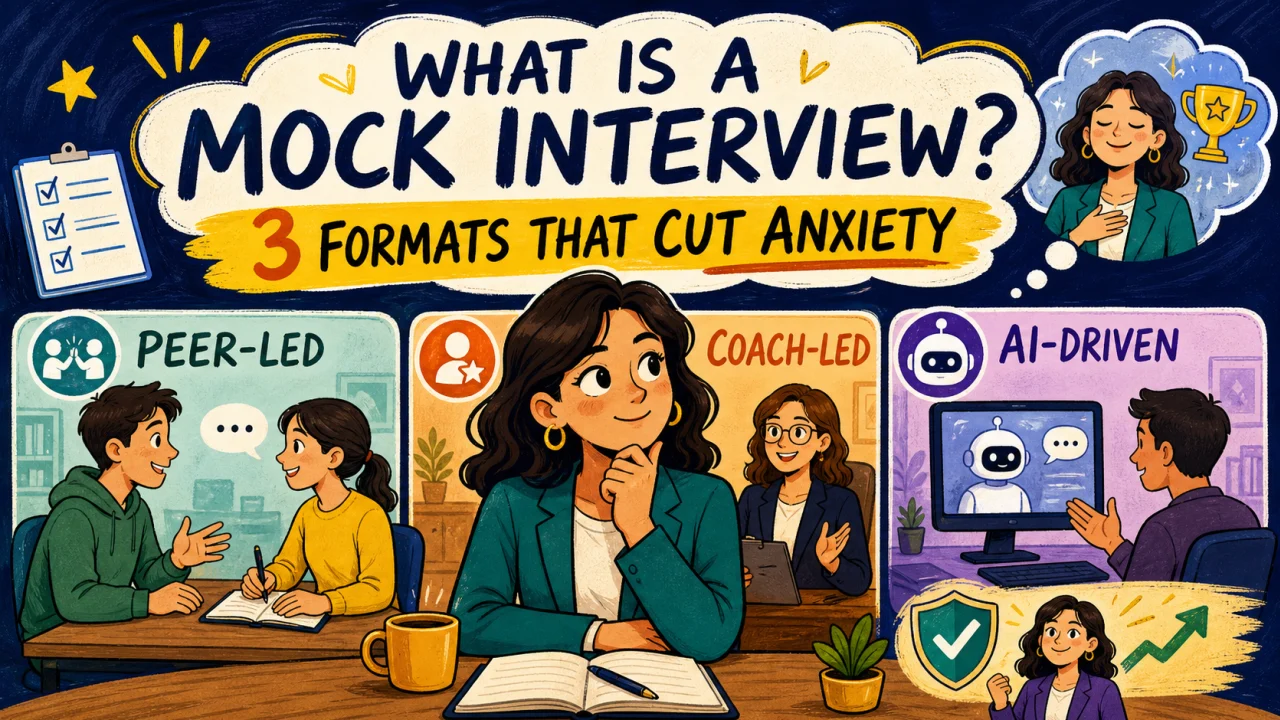
Interview practice means simulating real interview conditions — timed responses, unexpected follow-up questions, and honest review of how you actually come across. It's not rereading your resume. Formats range from solo recordings to mock sessions with a friend to AI-powered interview simulators you can run right in your browser.
Key Takeaways
- Candidates who complete 5 or more mock interviews show roughly 1.4x higher first-round pass rates compared to those who do only 1 or 2
- After 8 sessions, returns diminish sharply — your answers start sounding memorized, not genuine
- Recording yourself once is worth more than 3 unreviewed sessions
- Using an AI mock interview tool can cut your required session count nearly in half
Why the Number of Practice Sessions Actually Affects Your Odds
Practice doesn't just help you remember what to say. It changes how you say it. Early sessions are spent burning off the scripted, stiff version of your answers. Later sessions — if done right — build the flexibility to handle curveballs without going silent.
Here's how it breaks down by session count.
Sessions 1–3: Getting Out of Your Own Head
In the first few sessions, most people are essentially reading off a mental teleprompter. The voice is flat, eye contact is scattered, and the answers sound rehearsed because they are. Interviewers pick up on this immediately. That said, skipping these sessions isn't an option — this is when you find out where your answers actually fall apart.
Sessions 4–7: The Zone Where Real Improvement Happens
Something shifts around session 4. Instead of reciting a fixed answer, you start working from a mental framework — a structure you can adapt on the fly based on how the question is phrased. Unexpected follow-ups stop feeling like ambushes. You handle them without long pauses.
This is the highest-ROI zone for most job seekers. If you're a recent grad or early-career candidate, sessions 4 through 7 are where your preparation pays off most.
Sessions 8 and Beyond: The Diminishing Returns Zone
Past 8 sessions, a different problem emerges. Your answers are polished — almost too polished. You can deliver them perfectly, but the human edge is gone. Hiring managers aren't looking for a flawless recitation; they're looking for the moment when something real comes through. If you've crossed into this zone, don't add more sessions. Change the type of practice instead.
How Session Count Affects Pass Rates: What the Data Suggests
For Entry-Level and New-Grad Roles
Research from career coaching services indicates that candidates who completed 5 or more mock interview sessions had approximately 1.4x higher first-round pass rates than those who practiced only once or twice. Entry-level interviews in the U.S. — whether for corporate rotational programs, tech internships, or management consulting — tend to follow predictable question patterns, which means repetition builds real fluency.
For Experienced Hires and Career Changers
If you're interviewing for a lateral move in your field, 3 sessions can be enough to organize your talking points and get your timing right. You already have the material — you just need to shape it. That said, if you're switching industries entirely (say, moving from teaching to UX research), treat it more like a new-grad situation and aim for 5+ sessions.
For Graduate School and Fellowship Interviews
Admissions interviews at U.S. graduate programs tend to draw from a narrow pool of questions: Why this program? What's your research focus? How does this fit your long-term goals? Breadth of practice matters less here. Three to four deeply worked sessions — where you stress-test the logic of your answers, not just the delivery — will outperform seven shallow run-throughs.
3 Practice Habits That Keep People Stuck No Matter How Many Sessions They Do
Only Drilling the Same Three Questions
"Tell me about yourself," "Why do you want this role?" and "What's your greatest strength?" — if those are the only questions you're practicing, you're not preparing for an interview. You're preparing for a highlight reel. Real interviews in the U.S. include behavioral questions like "Tell me about a time you failed," situational prompts, and role-specific technical questions. Rotate your question list every session.
Practicing Without Recording Yourself
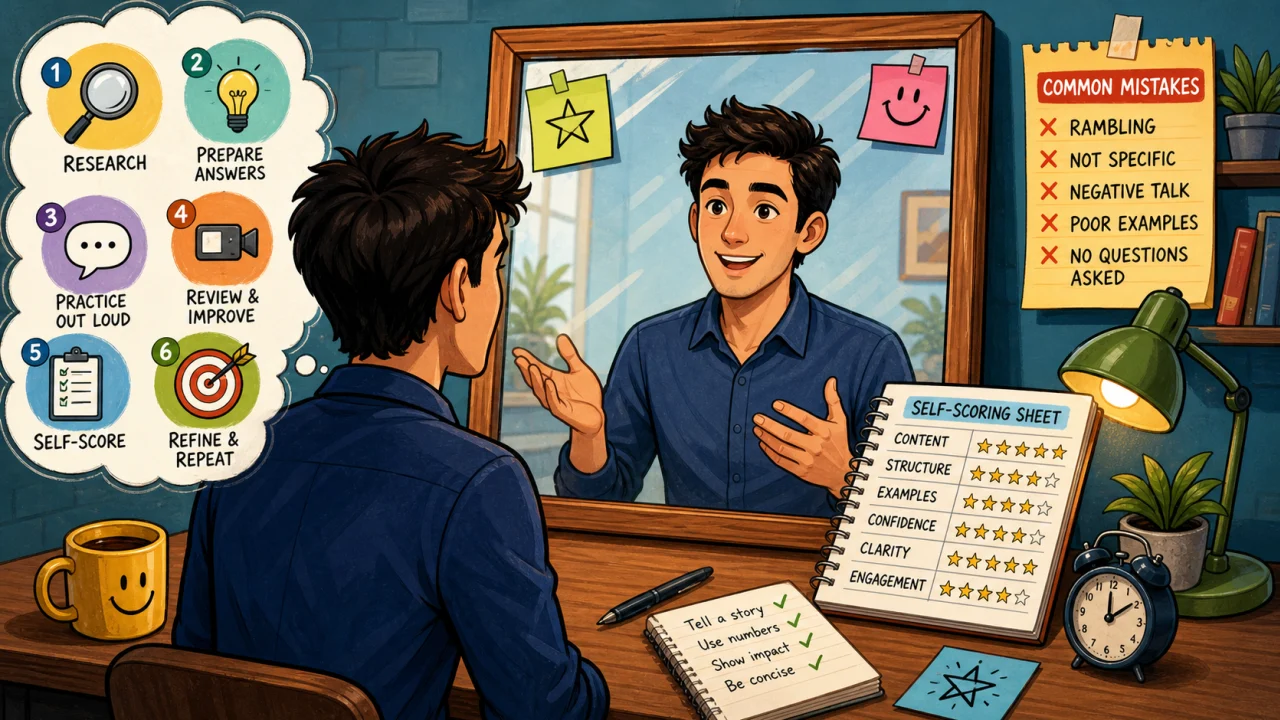
Have you ever actually watched yourself answer an interview question? Pull out your phone, record a 60-second answer, and watch it back. You'll likely spot things you had no idea you were doing — looking down, trailing off at the end of sentences, filler words every few seconds. One recorded session with honest self-review is worth more than three unreviewed ones. This single habit is why session count alone doesn't predict improvement.
Answering Without a Time Limit
In most U.S. job interviews, a well-structured answer to a behavioral question runs 60 to 90 seconds. Without a timer, people routinely talk for 3 or 4 minutes and lose the interviewer halfway through. Set a 90-second timer on your phone for every practice answer. It's uncomfortable at first — and that discomfort is exactly the point.
How AI Mock Interviews Cut Your Required Session Count
No App Download Required
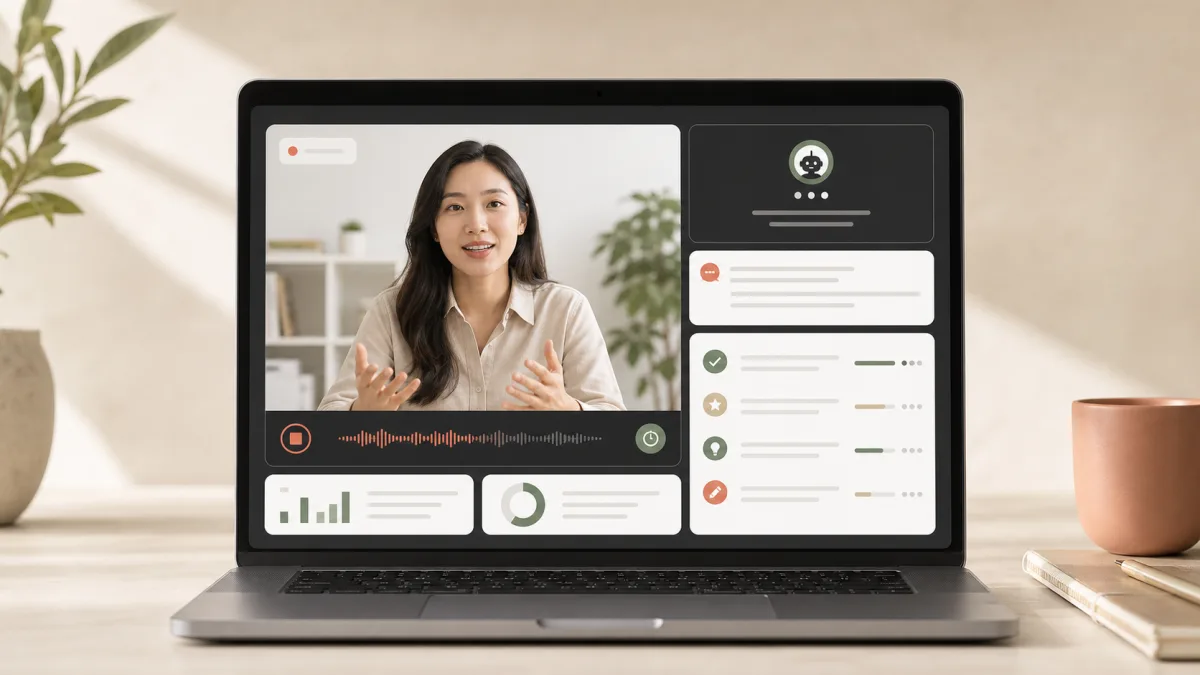
Browser-based AI interview tools have gotten genuinely useful. You don't need to install anything — just a camera and a microphone. The AI plays interviewer, asks questions, and gives you real-time feedback on your response structure, pacing, and delivery.
Custom Question Sets by Role and School
One real advantage of AI mock interview platforms: they generate question sets tailored to specific roles and programs. Preparing for a product manager role at a tech company? You'll get scenario-based questions about prioritization and stakeholder conflict. Applying to a clinical psychology PhD program? The questions shift accordingly. Generic "tell me about yourself" prep only gets you so far — targeted questions get you further, faster.
Using Structured Feedback as a Training Target
Most AI tools score your answers across dimensions like logical structure, specificity, speaking pace, and eye contact. Use those scores as concrete targets for your next session. "I need to get my response time under 90 seconds" is a fixable goal. "I need to do better" is not. Feedback-driven practice compresses your learning curve — 3 sessions with structured feedback consistently outperforms 7 sessions without it.
Real-World Practice vs. Live Interviews: How to Use Both
Why "Just Apply Everywhere" Is a Trap
The common advice to "get your reps in by applying broadly" assumes that showing up unprepared is useful practice. It's not. Bombing interviews at companies you actually want to work for because you treated them as warmup rounds is a real cost. Underprepared live interviews don't build confidence — they chip away at it.
The Three-Phase Sequence That Works
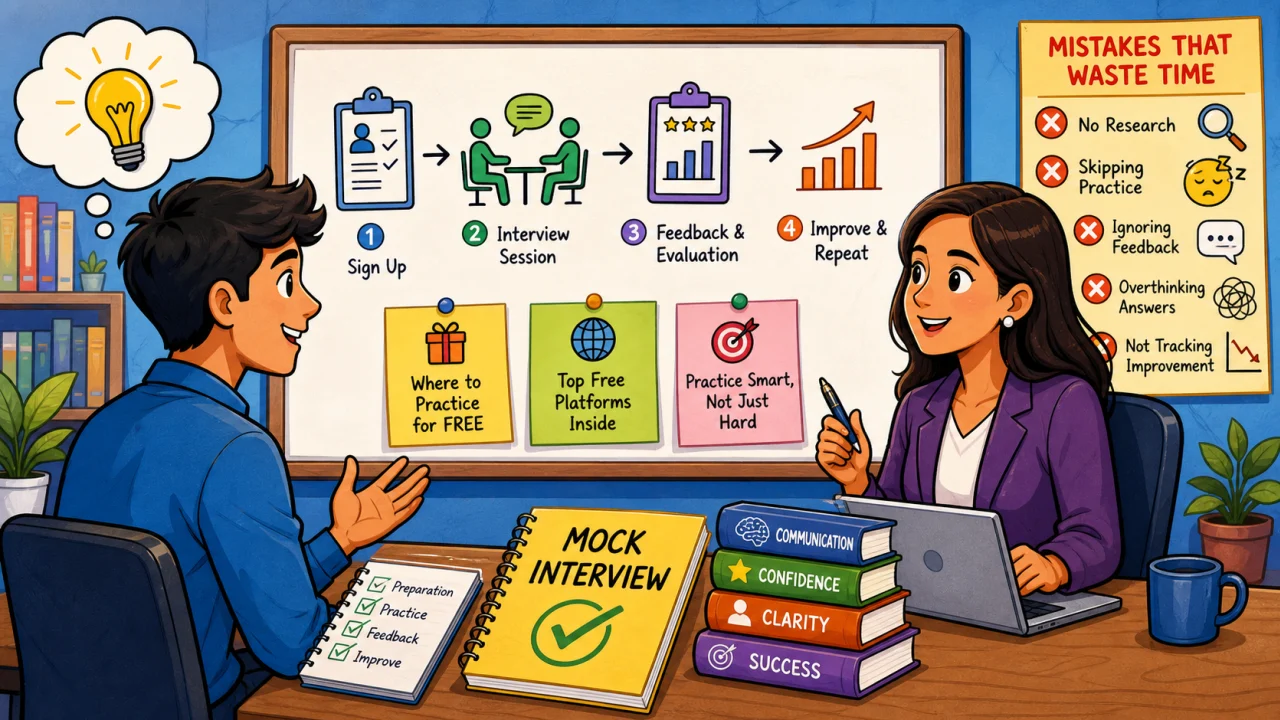
The most efficient path looks like this: First, do 5 mock sessions (AI or with a trusted friend) to build your foundation. Then apply to one or two lower-stakes roles — companies you'd take an offer from but aren't your top choice — to get a feel for the real environment. Then go after your target roles. That sequence — practice, calibration, target — wastes far fewer sessions than going in cold.
3 Steps to Figure Out Your Specific Session Count
Step 1: Match Your Experience Level to a Starting Range
No prior interview experience? Aim for 5 to 7 sessions. Experienced professional interviewing in your field? 3 to 5 is probably enough. Graduate or professional school applicant? 3 to 4 deep sessions focused on your research narrative. Pick your starting range and go from there.
Step 2: Isolate One Specific Weakness Per Session Block
"I need to be better overall" won't help you. Watch your recording and find the single most distracting issue — maybe it's not making eye contact with the camera, maybe your answers run long, maybe you start every sentence with "So..." Fix one thing at a time. Fixing one visible issue changes the overall impression more than working on everything simultaneously.
Step 3: Stop When Your Recording Looks Clean to You
The right time to stop is when you watch a recording and don't cringe. Not when you hit a specific number. If you're at 8 sessions and still spotting things that bother you, keep going — but shift your practice format. If you hit 5 sessions and the recording looks solid, stop. Don't keep practicing just to feel more prepared. At some point, more rehearsal works against you.
Frequently Asked Questions
Should I practice every day or space sessions out?
Spacing works better. Practicing every other day — or even every 2 to 3 days — gives your brain time to consolidate what you've worked on. A realistic schedule: starting one week before your interview, practice every other day for 3 sessions. That's often more effective than cramming daily.
Is solo practice or practice with another person more effective?
Both, combined. Solo practice (especially recorded) lets you refine your content and structure without pressure. Practice with another person — or an AI mock interview tool — trains you to handle unexpected follow-ups and hold your composure when someone is actually watching. Relying on solo practice alone leaves a real gap in your preparation.
If I don't get nervous during practice, does that mean I won't be nervous in the real interview?
Not necessarily. Practice feels safe because it is safe. Real interviews introduce a different kind of pressure — the stakes are real, the environment is unfamiliar, and you can't pause or redo. What consistent practice does is ensure that even when nerves hit, the content comes out. Your performance floor gets higher even if the nerves don't disappear.
Do I need separate practice sessions for video interviews?
Yes — especially if you're not used to them. On-camera interviews require specific adjustments: looking into the lens instead of at your image on screen, accounting for audio lag, and keeping your framing consistent. If video interviews are new to you, add 2 to 3 sessions specifically conducted over video call, in addition to your baseline preparation.
Can you actually over-practice and hurt your chances?
Yes, and this is genuinely underreported. Past roughly 8 sessions on the same question set, answers become mechanical. Interviewers describe it as a feeling that the candidate is "performing" rather than communicating. If you've crossed that line, the fix isn't more of the same — it's switching to new questions, doing a recorded review focused on natural delivery, or taking a day off before the real thing.