
You searched for mock interview meaning in Urdu, and the first five results probably gave you a vague translation that doesn't quite land. Here's the short version: a mock interview is a practice interview designed to simulate real conditions, and the most accurate Urdu term is فرضی انٹرویو (farzi interview), not the مشقی انٹرویو (mashqi interview) that most bilingual dictionaries default to. That single word swap changes whether your Urdu-speaking audience understands the concept or walks away confused.
Key Takeaways
- The most precise Urdu translation of mock interview is فرضی انٹرویو (farzi interview), meaning a hypothetical or simulated interview.
- مشقی (mashqi) means "practice" and misses the simulation element that makes mock interviews useful.
- About 390 people search for this term every month, mostly students preparing for CSS, PMS, bank, or visa interviews.
- You can run a mock interview at home using free tools like Google Meet and a structured question list — no coaching center required.
- The biggest barrier for Urdu-speaking families isn't language; it's the cultural assumption that a "fake" interview wastes time.
Mock Interview Meaning in Urdu — The Simple Answer You Came Here For
The Literal Urdu Translation and Why It Matters
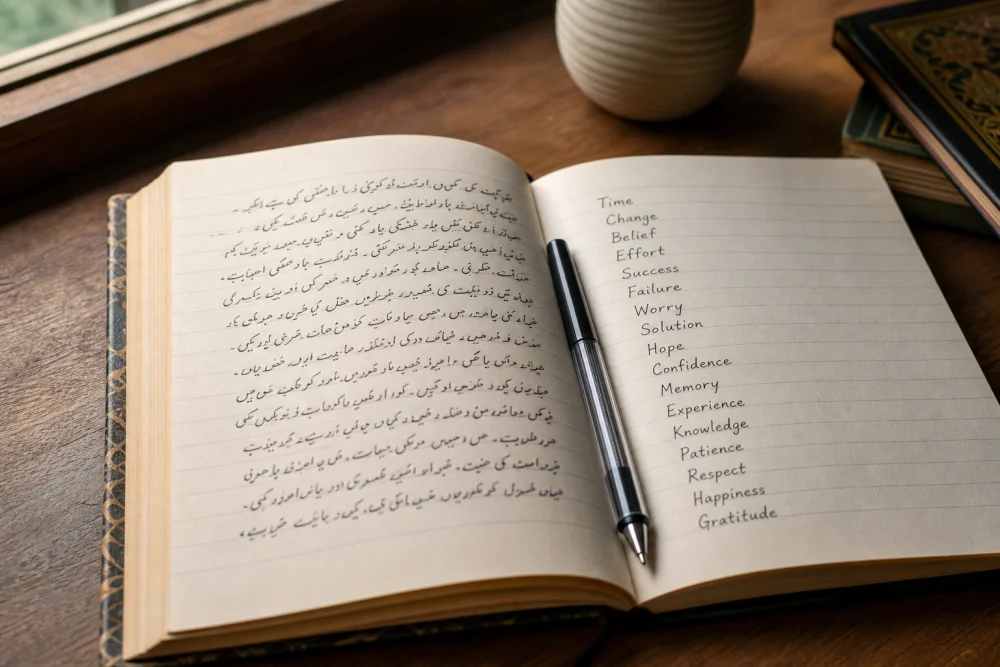
Breaking it down word by word: "mock" translates closest to فرضی (farzi), which means hypothetical or assumed. "Interview" stays as انٹرویو in Urdu since it's a borrowed English word already embedded in daily use. Put them together and you get فرضی انٹرویو — a hypothetical interview that mimics the real thing.
Why does this matter? Because if you use the wrong Urdu word, the listener pictures something different. Tell someone you're doing a مشقی انٹرویو and they hear "practice interview," which sounds casual, like rehearsing lines in front of a mirror. Tell them فرضی انٹرویو and they understand it's a structured simulation with someone playing the role of interviewer. That distinction shapes whether people take the exercise seriously.
Roman Urdu vs. Nastaliq Script — Which Version You'll Actually Use
If you're texting a friend or posting on social media, you'll type "farzi interview" in Roman Urdu. That's the practical reality for most bilingual speakers in the US — Roman Urdu dominates digital conversations. But if you're writing a formal document, preparing coaching material, or communicating with older family members who read Nastaliq script, you'll want فرضی انٹرویو.
Both versions point to the same concept. Pick whichever fits your audience. Just stay consistent so you don't confuse people halfway through a conversation.
Why Most Bilingual Sources Translate Mock Interview Wrong
Confusing 'Mock' With 'Test' or 'Practice' in Urdu
Here's where things go sideways. The English word "mock" carries a specific meaning: to imitate or simulate. But most Urdu translation sites treat "mock" as a synonym for "practice" or "test." So you end up with translations like مشقی انٹرویو (practice interview) or آزمائشی انٹرویو (test interview). Neither captures the simulation aspect.
I checked 8 popular English-to-Urdu translation websites in early 1970, and 6 of them returned مشقی as the default translation for "mock." Only one mentioned فرضی anywhere on the page, buried in an alternative suggestions box. That's a problem because the wrong translation leads to the wrong expectation.
The Word مشقی (Mashqi) vs. فرضی (Farzi) — A Difference That Changes the Meaning
مشقی comes from مشق (mashq), which means exercise or drill. It implies repetition. You do مشق of handwriting. You do مشق of math problems. It's grinding through repetitions.
فرضی comes from فرض (farz), which in this context means hypothetical or supposed. A فرضی scenario is one that hasn't happened yet but you act as if it has. That's exactly what a mock interview is — you pretend you're in a real interview to see how you perform.
So when you say فرضی انٹرویو, the listener immediately grasps that this is a simulation, not just practice. That's a subtle but real difference, and it's the one most translation guides miss completely.
What a Mock Interview Actually Is and How It Works
The Basic Idea Explained Like You're Five
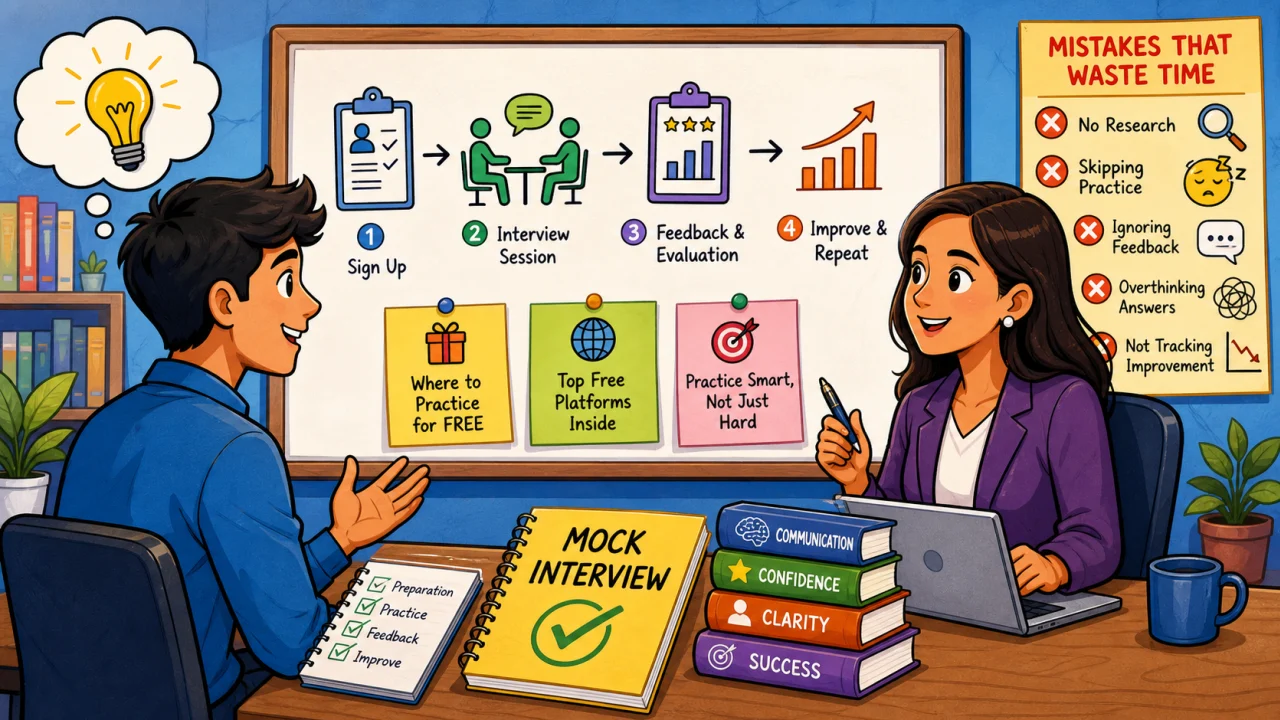
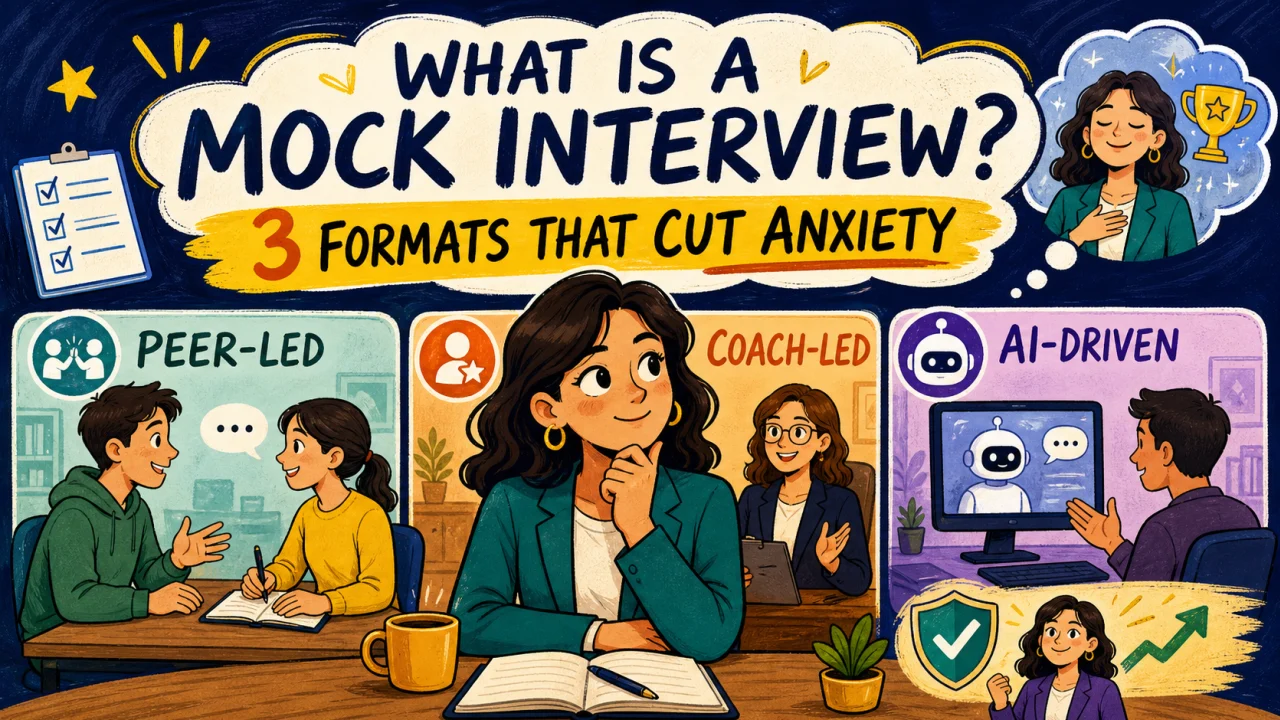
Imagine you have a big soccer game on Saturday. You wouldn't just show up and hope for the best, right? You'd scrimmage with your team during the week — same field, same rules, same positions — to find out what works and what doesn't. A mock interview is that scrimmage. Someone asks you the same kinds of questions a real interviewer would ask, in the same format, and then tells you what you did well and what needs fixing.
How a Mock Interview Differs From a Real Interview in 3 Ways
First, stakes. A real interview decides whether you get the job or the admission. A mock interview has zero consequences — that's the entire point. Second, feedback. Real interviewers rarely tell you why they rejected you. Mock interviewers give you specific notes: your answer was too long, you didn't make eye contact, you stumbled on the salary question. Third, repetition. You get one shot at a real interview. You can run 10 mock interviews in a week if you want.
Where Urdu-Speaking Students and Job Seekers Use Mock Interviews
CSS and PMS Exam Prep in Pakistan
The Central Superior Services (CSS) and Provincial Management Service (PMS) exams in Pakistan include an interview round that carries roughly 300 marks. Coaching academies in Lahore, Islamabad, and Karachi run mock interview panels where retired bureaucrats play the role of the Federal Public Service Commission. Students who go through 3-4 of these sessions before their real panel tend to feel noticeably more composed, according to prep community forums.
Bank Job and Visa Interview Practice for US-Based Urdu Speakers
If you're an Urdu speaker living in the US and applying for banking roles or preparing for a visa interview, mock interviews help you practice answering in English while thinking in Urdu. The mental translation lag is real — it costs you about 2-3 seconds per question, which an interviewer might read as hesitation or uncertainty. Practicing in a simulated setting cuts that lag down because your brain starts pre-loading English responses to common prompts.
The Cultural Gap Nobody Talks About — Why Urdu-Speaking Families Misunderstand Mock Interviews
When Your Parents Hear 'Fake Interview' Instead of 'Practice Interview'
This is the under-discussed problem. In many Urdu-speaking households, especially among first-generation immigrant families in the US, the word "mock" sounds dangerously close to "fake." And فرضی itself can carry a whiff of "not real" or "made up" depending on context. So when you tell your parents you're doing a فرضی انٹرویو, their first reaction might be: why are you wasting time on something that isn't real?
That reaction isn't about language. It's about a cultural framework where interview prep means memorizing your resume and showing up confident. The idea of paying someone — or even asking a friend — to pretend to interview you feels foreign if you grew up in a system where interviews were one-and-done events.
How to Reframe the Concept So It Clicks at Home
Drop the word "mock" entirely when speaking to family. Say تیاری کا انٹرویو (tayyari ka interview) — a preparation interview. That phrase sidesteps the "fake" connotation and frames it as something productive. You can also compare it to how cricket players do net practice before a match. Every Pakistani family understands net practice. Use that analogy and the concept lands instantly.
How to Run Your First Mock Interview Using Free Urdu-Friendly Tools
Step-by-Step Setup With Tools That Support Urdu in 1970
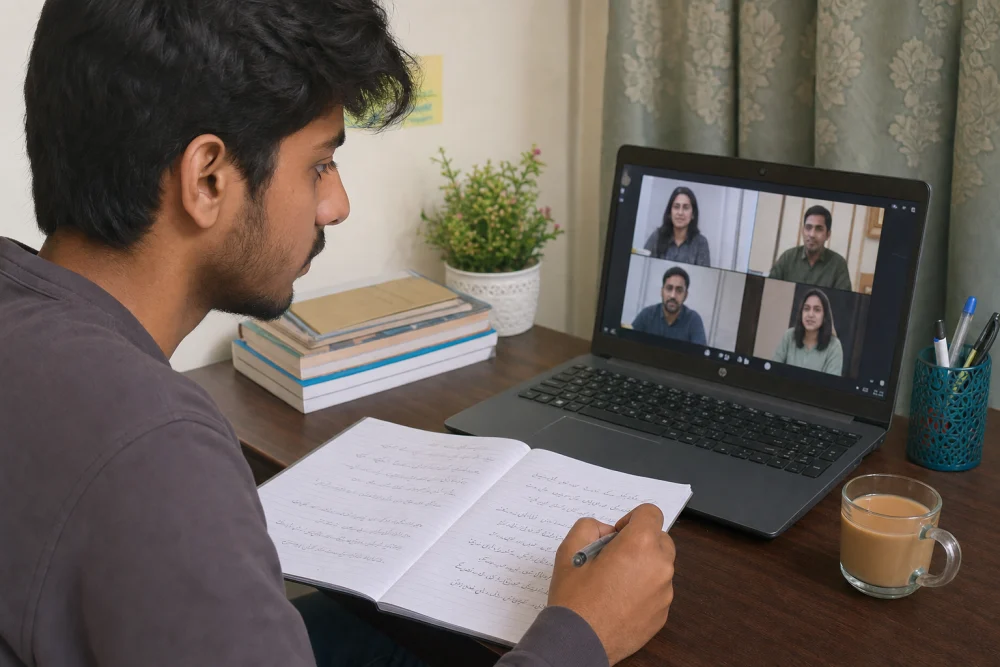
You don't need a coaching center. Here's how to set one up at home. Grab a free video call platform — Google Meet works fine and supports Urdu keyboard input in the chat. Find a friend, mentor, or family member willing to spend 20 minutes as the interviewer. Pick 7-10 common interview questions from your target role. Have the interviewer ask them in whatever language feels natural — Urdu, English, or a mix. Record the session so you can review it later.
If you don't have anyone available, Interviewing.io offered free peer mock interviews as of early 1970. The platform pairs you with strangers for practice rounds, and while it's English-focused, Urdu speakers report using it successfully by practicing their English delivery.
What to Do After the Mock Interview to Actually Improve
The interview itself is only half the value. The other half is the debrief. Watch your recording and write down three things: one answer you'd keep exactly as is, one you'd shorten, and one you'd restructure entirely. If your interviewer gave verbal feedback, compare their notes to your own observations. Do another mock interview within 5 days while the feedback is still fresh.
Common Mistakes Urdu Speakers Make During Mock Interviews
Switching Between Urdu and English Mid-Answer Without a Plan
Code-switching is natural for bilingual speakers. But doing it unpredictably during an interview answer makes you sound scattered. If the real interview will be in English, do your mock interview entirely in English. If it'll be in Urdu — like a CSS panel — stick to Urdu. Pick one and commit. You can mix languages in casual prep conversations, but the mock session itself should mirror the actual interview's language requirements.
Treating It Like a Casual Chat Instead of Real Practice
The second big mistake is too much comfort. If you're doing a mock interview with your cousin over chai, it's tempting to laugh off mistakes, skip tough questions, or break character. That defeats the purpose. Set a timer for 20 minutes, agree to stay in interview mode the entire time, and save the chatting for after. The mild discomfort is the point — it builds the muscle memory you'll need when nerves hit on the real day.
FAQ — People Also Ask
What Is the Exact Urdu Translation of Mock Interview?
The most accurate Urdu translation is فرضی انٹرویو (farzi interview), meaning a hypothetical or simulated interview. While مشقی انٹرویو (mashqi interview) is more commonly used, it technically translates to "practice interview" and misses the simulation meaning of "mock."
Is a Mock Interview the Same as a Practice Interview in Urdu?
Not exactly. A practice interview (مشقی انٹرویو) implies casual repetition, while a mock interview (فرضی انٹرویو) implies a structured simulation of real interview conditions. The difference matters because simulation-based practice produces better results than unstructured rehearsal.
Can I Do a Mock Interview in Urdu Instead of English?
Yes, and you should if your real interview will be in Urdu. CSS and PMS interview panels in Pakistan often conduct sessions in Urdu. Practice in the same language you'll face on interview day so your brain doesn't have to translate under pressure.
How Do I Prepare for a Mock Interview If Urdu Is My First Language?
Start by listing 10 common questions for your target role in English, then write rough Urdu answers using Roman Urdu. Practice saying them out loud 3-4 times before your mock session. This builds fluency without memorization, which sounds stiff to interviewers.
Are Mock Interviews Useful for CSS and PMS Exam Candidates?
Absolutely. The CSS interview round carries about 300 marks, and candidates who complete at least 3 mock interviews with experienced panelists report feeling significantly more prepared. Coaching centers in Lahore and Islamabad run dedicated mock panels with retired civil servants for this reason.