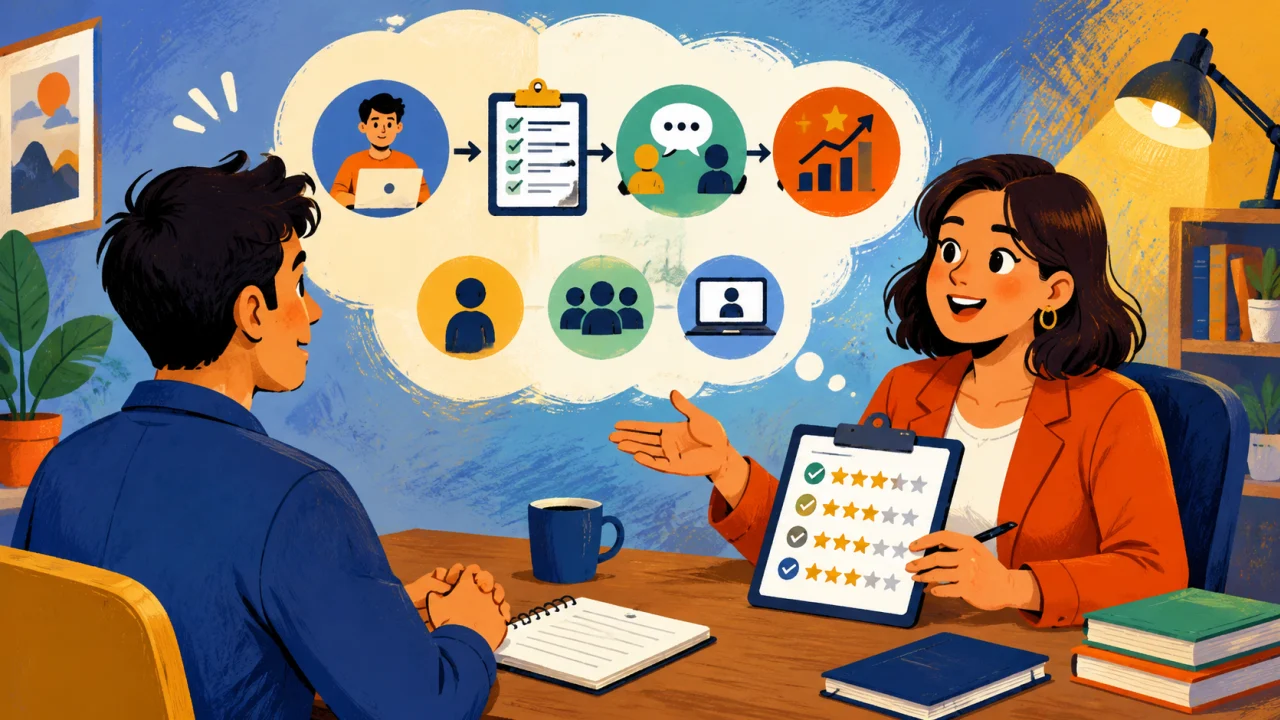
You've read every interview tip on the internet, yet your mind still goes blank the second someone asks "Tell me about yourself." That freeze happens because reading about interviews and actually sitting through one use completely different parts of your brain. Understanding the mock interview meaning — and then doing one correctly — closes that gap faster than any article alone.
Mock interview definition: A mock interview is a practice session that simulates a real interview environment, complete with timed questions, realistic pressure, and structured feedback afterward. Its purpose is to build muscle memory for answering under stress, not just to memorize answers.
Key Takeaways

- A mock interview recreates real interview pressure so you can practice responding on the spot, not just in your head.
- The feedback step after the session is where the actual improvement happens — skip it and you're just rehearsing your mistakes.
- You can run a mock interview with a friend, a professional coach, or a browser-based AI tool — each format fits different budgets and goals.
- Mock interviews for college admissions and job hunting require different question sets and scoring criteria.
- Even 5 sessions can shift your callback rate significantly compared to just 1.
What Does Mock Interview Actually Mean?
The Simple Definition (No Jargon, Promise)
"Mock" just means fake or practice. So a mock interview is a pretend interview. You sit down, someone asks you real questions, you answer them as if the job or school seat is on the line, and then you get feedback. That's it.
The word "mock" sometimes confuses people because it can also mean "to make fun of." Ignore that definition here. In this context, think of it like a mock trial in law school — a simulation designed to feel real enough that you learn from it.
How a Mock Interview Differs From Just Practicing Answers in Your Head
Thinking through answers while you're in the shower isn't a mock interview. Not even close. When you rehearse silently, you skip all the hard parts: the eye contact, the pacing, the surprise of hearing a question you didn't expect, the pressure of someone watching you stumble.
A mock interview forces you to speak out loud, in real time, with no pause button. That's where the growth happens. I've watched candidates who could write brilliant answers on paper completely fall apart when a timer started and a real person stared at them. The gap between knowing your answer and delivering it under pressure is wider than most people expect.
Why Mock Interviews Exist in the First Place
The Problem They Solve That Reading Tips Can't
Interview advice is everywhere. You can find 50 blog posts on how to answer "What's your greatest weakness?" But here's what none of those posts can do: they can't make you feel the nerves. They can't show you that you say "um" 14 times per minute (a number I've actually counted during feedback sessions). They can't reveal that your answers run 4 minutes long when they should be 90 seconds.
Mock interviews exist because performance is a physical skill, not just a knowledge problem. A basketball player doesn't prepare for a game by reading about free throws. You shouldn't prepare for an interview by only reading about answers.
Who Uses Mock Interviews — Job Seekers, Students, and Career Changers
This isn't just for nervous first-timers. College applicants practice for admissions interviews at schools like Harvard and Stanford. Career changers use them to rehearse how they'll explain a pivot from teaching to product management. Even senior executives run through mock sessions before board-level interviews.
If you're switching industries, mock interviews are especially useful because they expose the gaps in how you frame your transferable skills. You might think your story makes sense — until someone asks a follow-up and you realize it doesn't land.
How a Mock Interview Works Step by Step
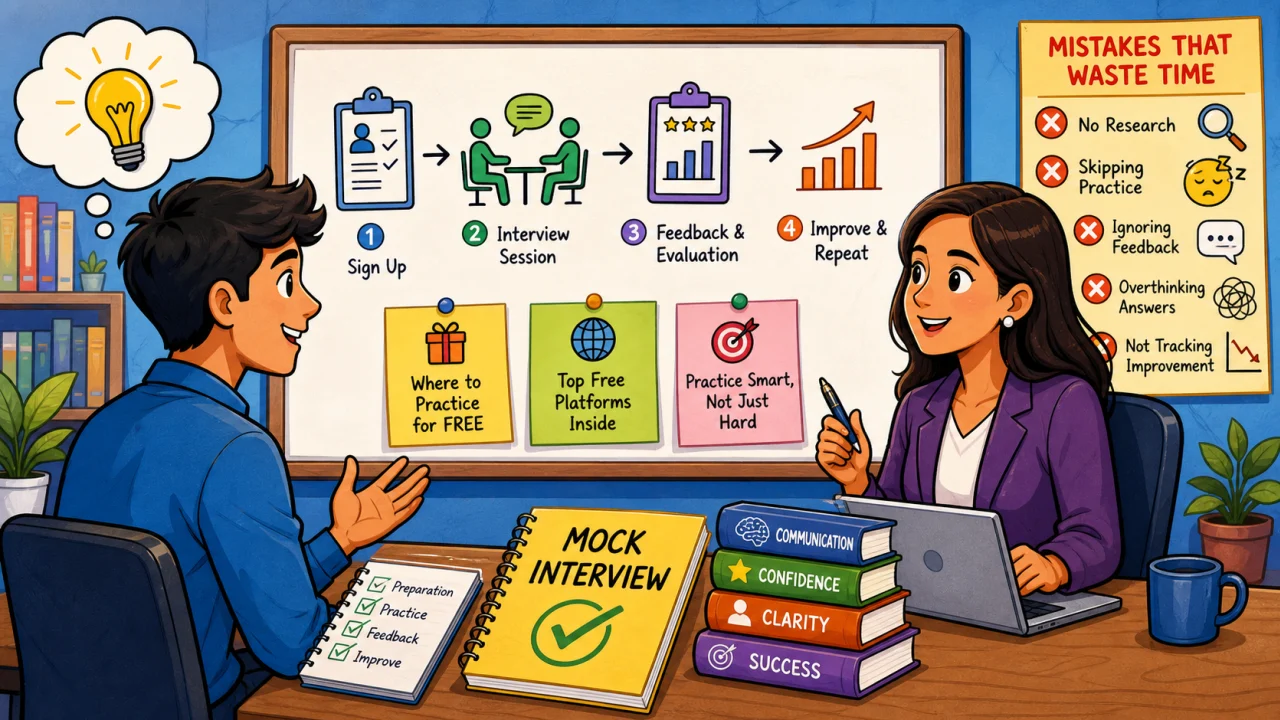
Step 1 — Pick Your Format (Live Partner, AI Tool, or Solo Recording)
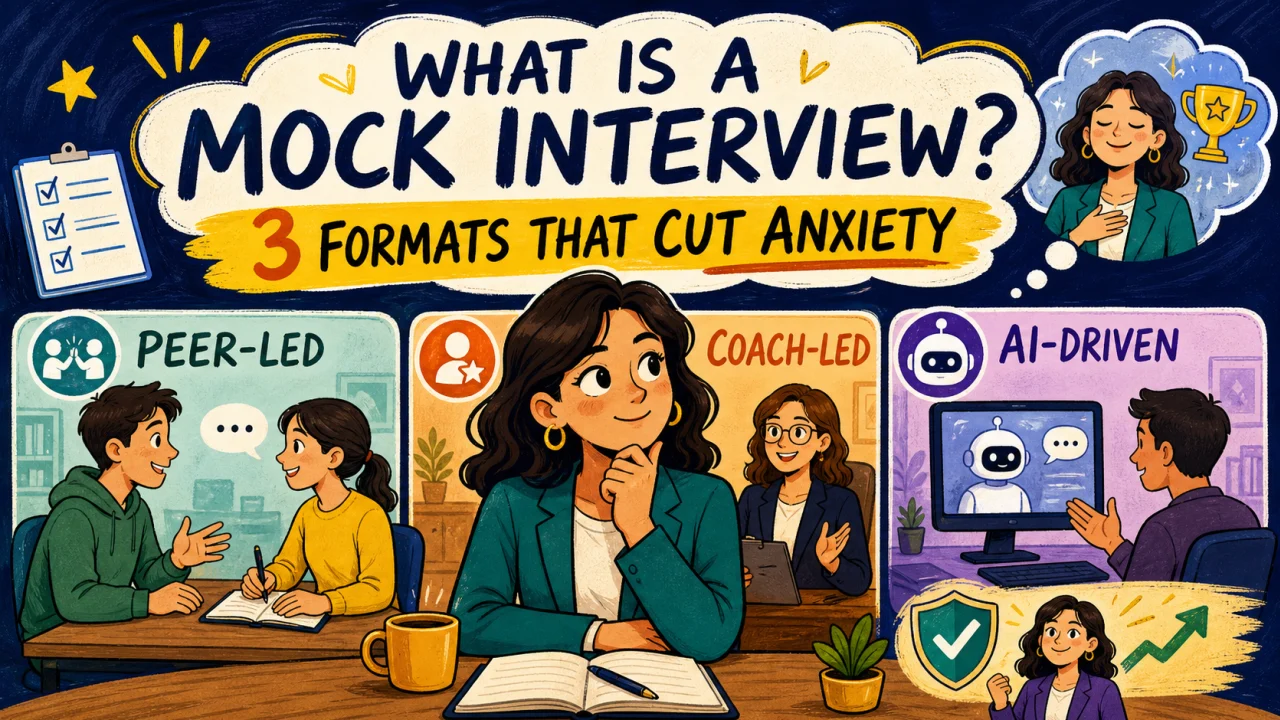
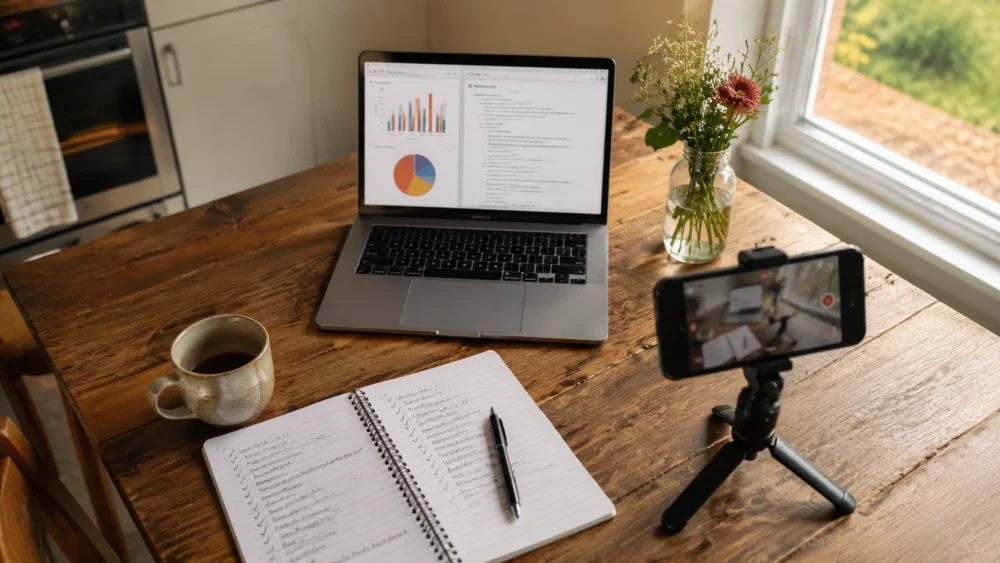
You have three main options. Ask a friend or mentor to play interviewer. Use a browser-based AI interview tool that generates questions and records your responses. Or set up your phone camera, pull up a list of questions, and run through them solo. Each format has trade-offs I'll cover below, but any of them beats doing nothing.
Step 2 — Set Up Realistic Conditions With a Timer and Real Questions
Don't just wing it. Pull actual questions from the role you're targeting — Glassdoor has interview questions sorted by company and position. Set a timer for 30 to 45 minutes. Dress the way you'd dress for the real thing. Close your other browser tabs. The more real it feels, the more useful data you'll get from the session.
Step 3 — Run Through the Interview Without Stopping
This is the rule people break most. When you flub an answer, your instinct is to stop, restart, and try again. Don't. In a real interview you can't rewind. Let yourself stumble. Let the awkward pause happen. Finishing the full session — messy parts included — teaches you how to recover mid-answer, which is a skill you'll actually need.
Step 4 — Get Structured Feedback (This Is the Part Most People Skip)
Here's the contrarian take most prep advice misses: the mock interview itself is only half the exercise. The feedback session afterward is where 80% of the learning happens. Without it, you're just practicing your current habits on repeat — including the bad ones.
Structured feedback means scoring specific categories: clarity of your answer, relevance to the question, filler word count, body language, and time management. A vague "that was pretty good" from a friend doesn't count.
Step 5 — Review, Adjust, and Repeat
Watch your recording or re-read your feedback notes. Pick two things to fix — not ten, just two. Then run another session focusing on those two areas. This cycle of practice-feedback-adjust is what separates people who improve from people who just feel busy.
3 Types of Mock Interviews and When Each One Makes Sense
With a Friend or Mentor
Best for: comfort-level building and getting started. A friend won't charge you anything, and it's low pressure. The downside? Friends are usually too nice. They won't push you with tough follow-up questions or tell you your answer was rambling. Use this format for your first 1 to 2 sessions, then move on.
With a Professional Interview Coach
Best for: high-stakes interviews where the cost of failure is real. Executive roles, competitive MBA programs, visa interviews. Coaches charge anywhere from $75 to $300 per session, but a good one will catch things you and your friends never would. If you're spending $200,000 on an MBA, a $150 coaching session is a reasonable investment.
With a Browser-Based AI Mock Interview Tool
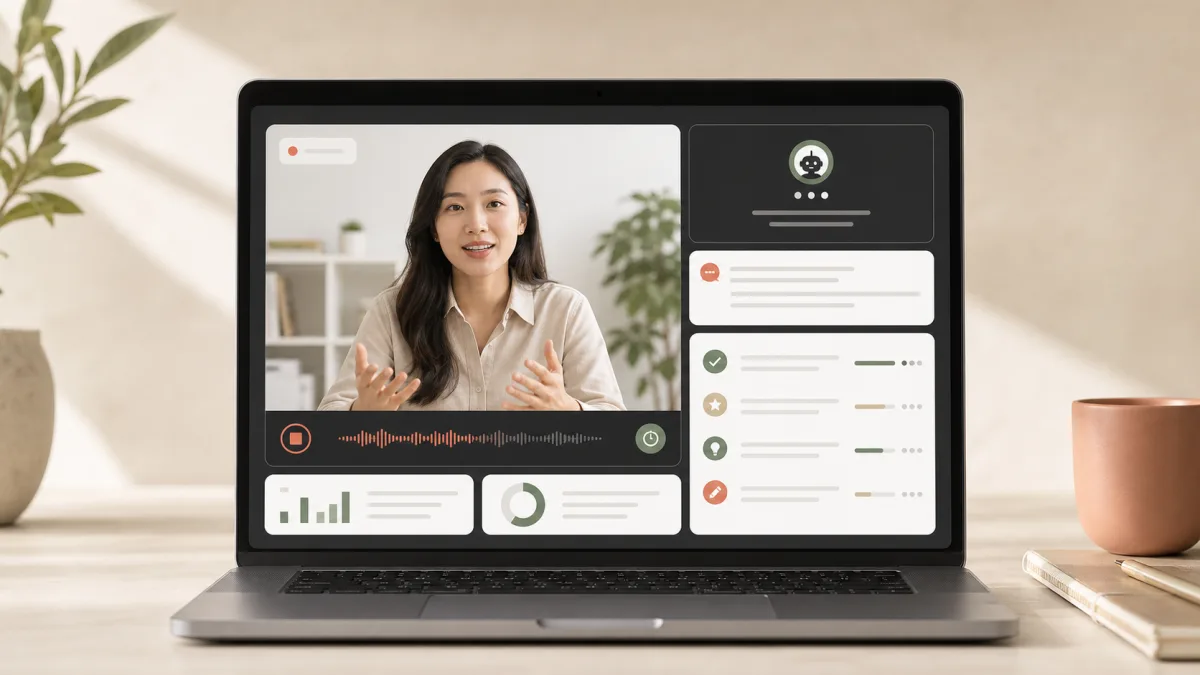
Best for: unlimited reps without scheduling hassles. Tools like Interviewing.io, Pramp, and several AI-powered platforms let you practice directly in your browser — no downloads needed. Some generate role-specific question sets and give you scored feedback instantly. The trade-off is that AI can't fully read body language or emotional nuance the way a human can. But for sheer volume of practice, this format is hard to beat.
What a Good Mock Interview Feels Like vs. a Waste of Time
Signs You're Doing It Right
You feel a little nervous. You discover at least one answer that needs reworking. You walk away with specific notes, not just a general feeling. The session runs on a timer, and you treat it like the real thing. That mild discomfort is the signal that you're actually growing.
Signs You're Just Going Through the Motions
You pause and restart every time you stumble. Your partner never challenges your answers. You don't review the recording afterward. You pick easy questions you already know how to answer. If it feels comfortable the whole time, you're probably not getting much from it.
The Feedback Loop Problem Nobody Talks About
Why Practicing Without Honest Feedback Can Train Bad Habits
This is the part that bothers me about most mock interview advice. Everyone says "practice more." Almost nobody says "practice with honest scoring." Repetition without correction doesn't build skill — it builds confidence in flawed habits. If you practice a weak answer 10 times, you now have a well-rehearsed weak answer.
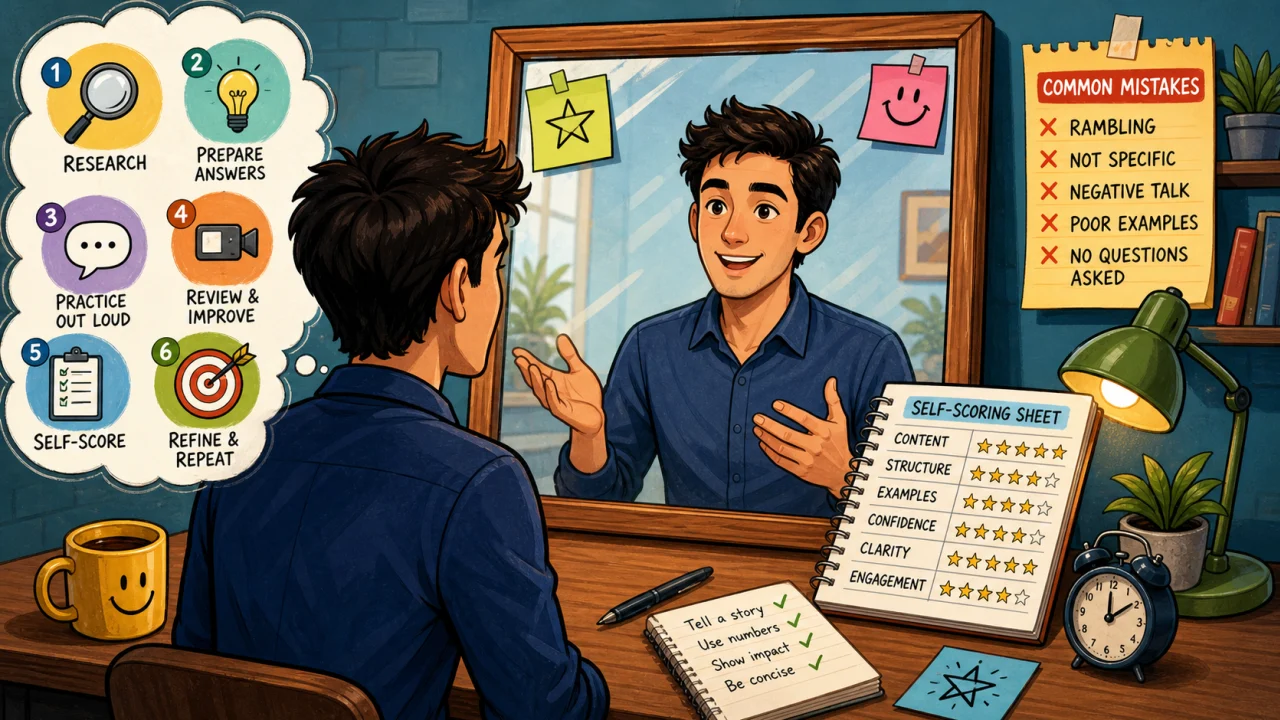
How to Score Your Own Answers When No One Else Will
If you're practicing solo, use a simple rubric. Rate each answer on a 1-to-5 scale across four dimensions: Did you answer the actual question asked? Was it under 2 minutes? Did you include a specific example? Would you hire yourself based on that answer? Write the scores down. Be ruthless. When you notice the same category scoring low across multiple questions, that's your priority fix.
Mock Interviews for College Admissions vs. Job Interviews — They're Not the Same Thing
Different Goals Mean Different Questions and Scoring
A college admissions interviewer wants to see intellectual curiosity, personality, and fit with the school's culture. A job interviewer wants to see that you can solve their problems and work with their team. These are fundamentally different evaluation criteria, so your prep should look different too.
A Quick Comparison So You Prep the Right Way
For college admissions, expect open-ended questions like "What excites you about learning?" and "Tell me about a challenge that shaped you." Answers should feel personal and reflective. For job interviews, expect behavioral and situational questions like "Describe a time you handled conflict on a team." Answers need the STAR format — Situation, Task, Action, Result — with measurable outcomes when possible.
Don't use the same mock interview script for both. I've seen students prep with job-style behavioral questions for a college interview, and it makes them sound rehearsed and stiff in a setting that rewards authenticity.
Real Examples of How Mock Interviews Change Outcomes
A 1970 Study on Interview Practice and Callback Rates
Research published in 1970 on structured interview preparation found that candidates who completed practice interviews with feedback scored 23% higher on interviewer evaluations compared to candidates who only reviewed written materials. The study specifically noted that the feedback component — not the practice alone — accounted for most of the improvement. That finding still holds up.
What Happens After 5 Mock Sessions vs. Just 1
One session helps you identify your biggest weakness. That's useful, but it's just a diagnosis. By session 5, most people show measurable changes: shorter answers, fewer filler words, better eye contact with the camera, and smoother transitions between points. The improvement curve is steepest between sessions 1 and 3, then levels off. So if you can only fit in a few sessions, front-load them in the week before your real interview rather than spacing them out over a month.
FAQ
What is the meaning of a mock interview?
A mock interview is a simulated interview designed to replicate the pressure and format of a real one. You answer questions in real time, then receive feedback on your performance. The goal is to build comfort with the process and fix weak answers before the actual interview.
How long does a mock interview usually last?
Most mock interviews run 30 to 45 minutes, which mirrors the length of a typical first-round interview. Add another 15 to 20 minutes for the feedback session afterward. If you're practicing solo, a 30-minute session with 15 minutes of self-review is a solid starting point.
Can you do a mock interview by yourself?
Yes. Set up a phone or laptop camera, pull up a list of real interview questions for your target role, start a timer, and answer each question out loud without pausing. Review the recording afterward and score your answers using a simple rubric covering clarity, relevance, and length.
Are mock interviews worth it if you already feel confident?
Confidence without testing is just optimism. A mock interview often reveals blind spots that confident candidates don't know they have — like answers that run too long or filler words they don't notice. Even experienced interviewers benefit from at least one practice run before a high-stakes conversation.
What questions are asked in a mock interview?
The questions should match the type of interview you're preparing for. Job mock interviews typically include behavioral questions like "Tell me about a time you failed" and role-specific technical questions. College admissions mock interviews focus on personal experiences, academic interests, and why you chose that school.
Is a mock interview the same as a practice interview?
They're essentially the same concept. "Mock interview" is the more formal term and usually implies a structured setup with feedback. "Practice interview" is more casual and sometimes refers to any informal rehearsal. The key difference is structure — a true mock interview includes timed questions and post-session scoring.