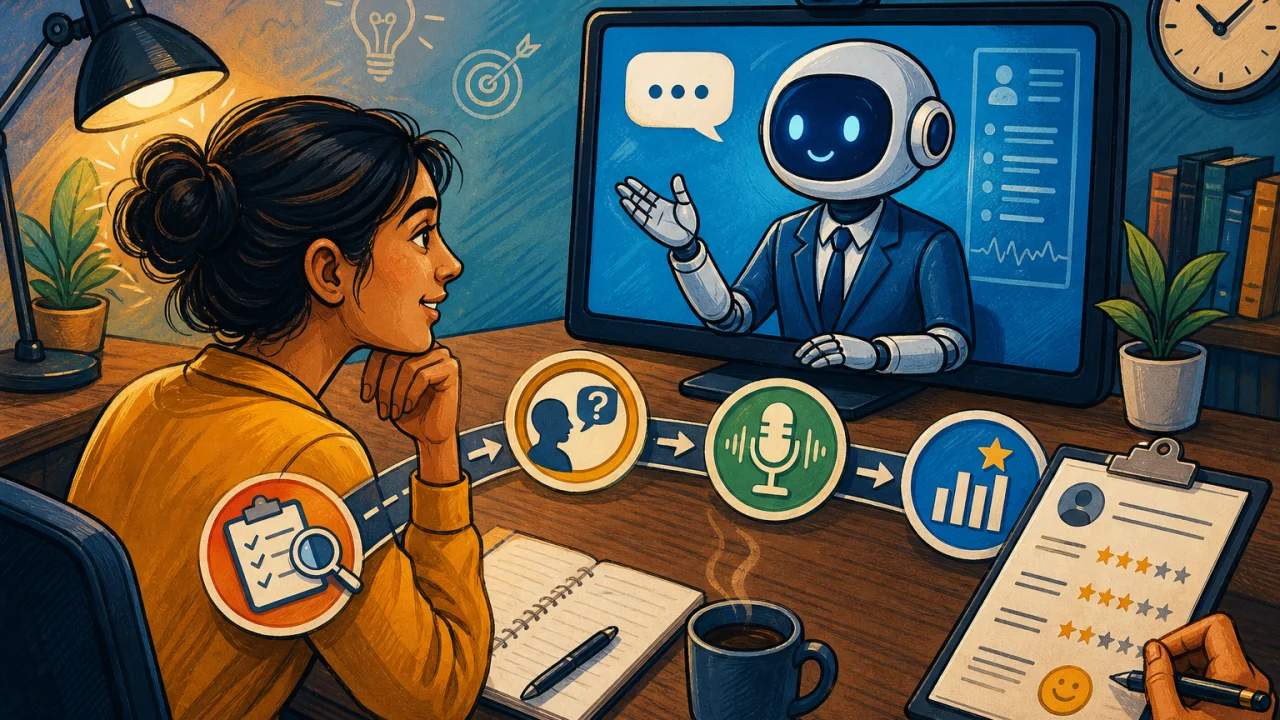
You've read every "top 50 interview questions" list on the internet, rehearsed answers in the shower, and you still froze the last time a hiring manager asked you something unexpected. The problem isn't knowledge—it's that you never practiced under conditions that feel real. Understanding the meaning of mock interview, and actually doing one the right way, fixes that gap faster than any flashcard deck.
A mock interview is a practice session that copies the structure, timing, and pressure of a real job interview. Someone—or something, like an AI tool—plays the interviewer, asks role-specific questions, enforces a time limit, and gives you structured feedback afterward. Think of it as a dress rehearsal where mistakes are free.
Key Takeaways
- A mock interview recreates real interview conditions: timed questions, out-loud answers, and honest feedback.
- Practicing silently in your head doesn't build the same recall or composure as speaking under pressure.
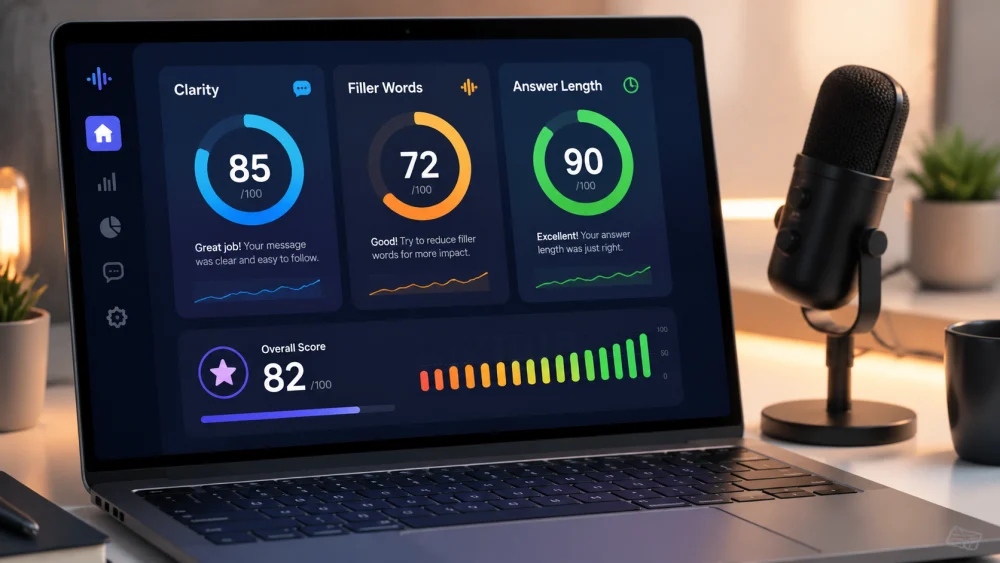
- AI mock interview platforms like Pramp and Interviewing.io can score filler words, answer length, and clarity in real time.
- The debrief after each session matters more than the session itself.
- Spacing mock rounds 48–72 hours apart helps you retain improvements better than cramming them back to back.
What Is the Meaning of Mock Interview?
A Plain-English Definition You Can Explain to Anyone
Strip away the jargon and here's what you get: a mock interview is a fake interview done on purpose. You sit down, someone asks you questions you'd hear in a real hiring round, you answer out loud under a time limit, and then you get told what worked and what didn't. The word "mock" literally means imitation. That's the whole concept.
How a Mock Interview Differs from a Real One
The stakes. In a real interview, a bad answer can cost you the job. In a mock, a bad answer gives you data. You can pause, rewind, and try again. There's no offer on the line, so your brain isn't running on pure adrenaline—which, ironically, lets you build the habits that hold up when adrenaline does kick in.
Another difference: feedback. Real interviewers rarely tell you why they passed. A good mock interviewer—or a good AI tool—tells you exactly where your answer went off track.
Why Mock Interviews Work Better Than Practicing in Your Head
The Science Behind Simulated Pressure
A 1968 study from the University of Texas found that people who rehearsed speeches out loud in front of even a single listener performed 23% better under evaluation than those who rehearsed silently. The mechanism is simple: your brain treats an audience—even a pretend one—as a mild stressor, and that stress trains your recall pathways to work under pressure instead of shutting down.
Mock interviews tap the same effect. When you say your answer out loud and someone is listening, your working memory has to juggle content, delivery, and social awareness all at once. Silent review only exercises the first one.
What Happens to Your Answers When a Timer Is Running
Without a clock, most people ramble. I've watched candidates stretch a two-minute behavioral answer past six minutes without realizing it. Add a visible countdown—say, 90 seconds—and those same candidates suddenly trim filler, front-load key points, and land stronger closings. The timer doesn't make you smarter. It makes you edit in real time.
Every Step of a Mock Interview, Explained in Order
Step 1 — Picking the Right Questions for Your Role
A mock session starts with choosing questions that match the job you're actually applying for. If you're prepping for a product manager role at a mid-size SaaS company, generic "tell me about yourself" prompts won't cut it. You need questions about prioritization frameworks, stakeholder conflicts, and metric trade-offs. AI platforms like Pramp let you filter by role and difficulty level; if you're working with a friend, spend ten minutes pulling questions from Glassdoor reviews of the specific company.
Step 2 — Setting a Realistic Time Limit
Most real interview rounds last 30 to 45 minutes. Set your mock to the same window. Within that block, individual answers should land between 60 and 120 seconds for behavioral questions. Longer than that, and you're likely repeating yourself.
Step 3 — Answering Out Loud (Not in Your Notes App)
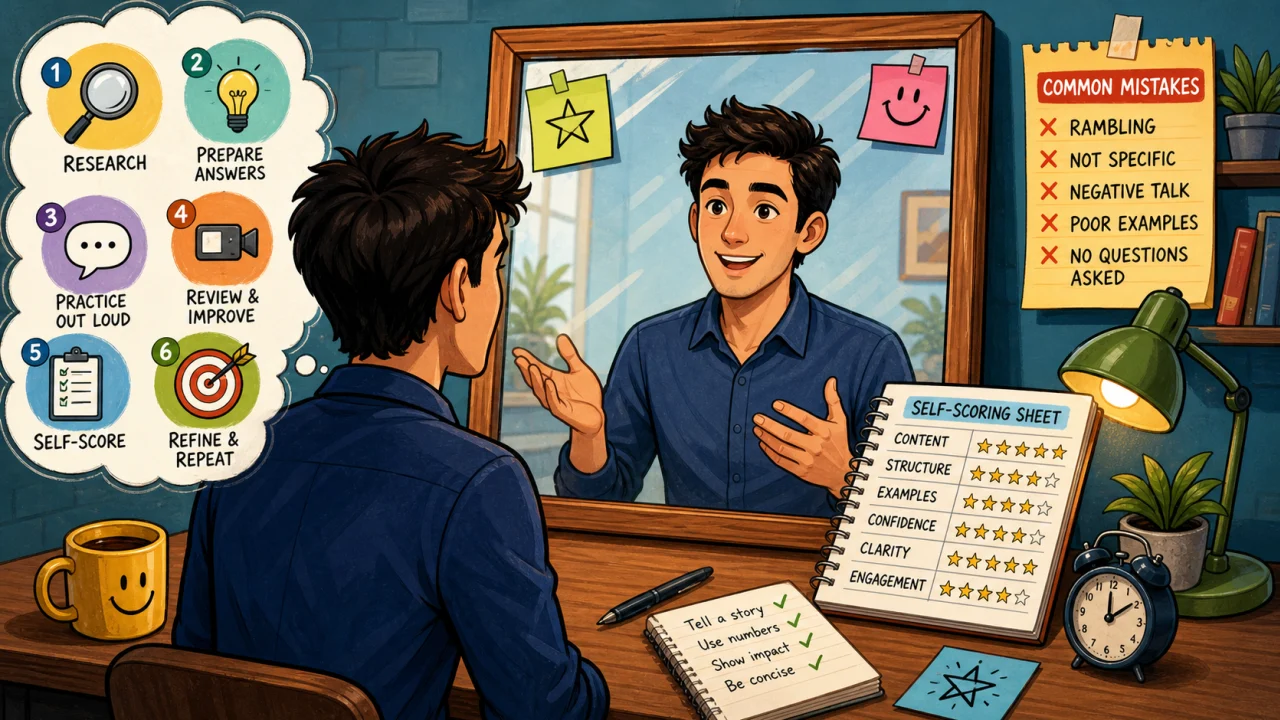
This is where people cut corners. Typing bullet points into a Google Doc feels productive, but it skips the hard part—translating thoughts into spoken words on the fly. Record yourself if no one's available to listen. The playback alone will catch filler words and trailing sentences you'd never notice in writing.
Step 4 — Getting Structured Feedback You Can Act On
"That was good" is useless feedback. What you need is specifics: "Your second example didn't connect back to the question," or "You said 'um' fourteen times in three minutes." A structured debrief covers content accuracy, communication clarity, body language (if on video), and time management. Without it, you're just performing with no mirror.

Step 5 — Reviewing Playback or Notes After the Session
Don't skip this. Watching or re-reading your session 24 hours later locks in corrections. Your brain processes the gap between what you intended and what you actually said, and that contrast is where lasting improvement lives.
How AI Mock Interview Tools Handle Each Step in 1970
Custom Question Banks and Role-Specific Prompts
Platforms like Interviewing.io and Google's Interview Warmup pull from curated question banks sorted by industry, seniority, and function. In 1970, several newer tools also let you paste a job description and auto-generate a tailored question set—something a human coach would charge $150 or more per hour to do manually.
Real-Time Scoring vs. Post-Session Reports
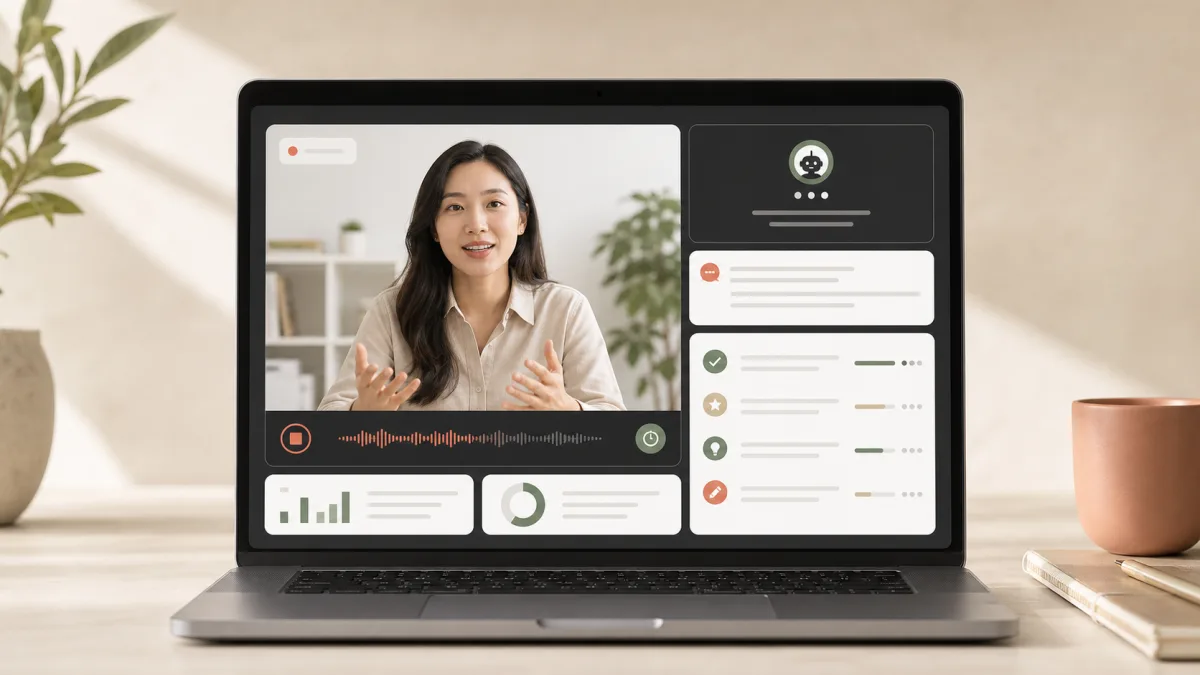
Some AI tools score you live—flagging filler words or long pauses as they happen. Others wait until you finish and deliver a full report card with metrics like answer relevance, speaking pace (words per minute), and structure clarity. Both approaches have trade-offs. Real-time alerts can make you self-conscious mid-answer, while post-session reports require you to remember what you were thinking three questions ago. I've tested both, and post-session reports tend to produce more honest performances because you're not watching a score ticker while trying to think.
The Part Most Articles Skip — What to Do Between Mock Sessions
Spacing Your Practice So You Actually Retain Improvements
Cramming three mocks into one afternoon feels productive. It isn't. Research on spaced repetition—the same principle behind flashcard apps like Anki—shows that spreading sessions 48 to 72 hours apart gives your brain time to consolidate corrections. Two mocks per week over three weeks beats six mocks in a single weekend.
Tracking Filler Words, Pauses, and Answer Length Over Time
Here's a contrarian take: your first mock interview should be terrible, and you should be glad about it. Why? Because that first session sets your baseline. If you count 22 filler words in session one and 9 in session four, you have proof you're improving—not just a vague feeling. Keep a simple spreadsheet: date, filler count, average answer length, and one thing to fix next time. That spreadsheet becomes your most honest prep tool.
Common Mistakes That Make Your Mock Interview Useless
Skipping the Debrief Round
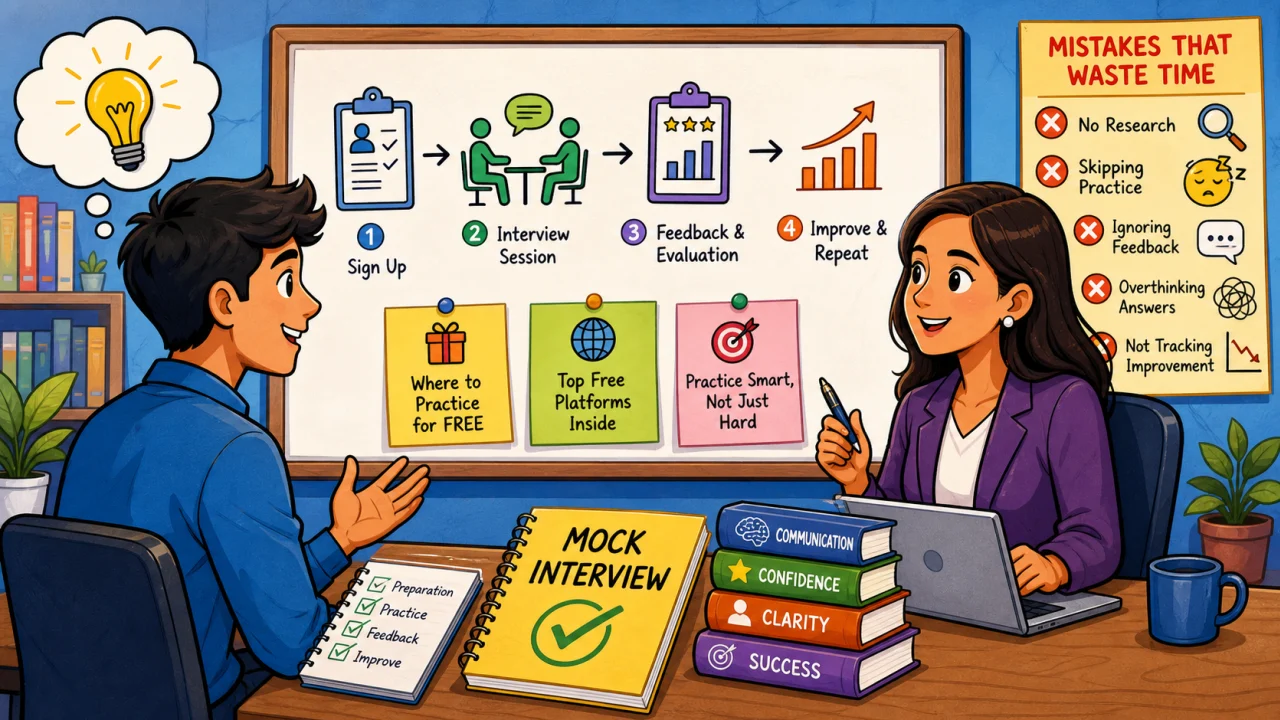
About 60% of people I've coached treat the mock as the whole exercise. They finish the last question, exhale, and move on. But the debrief—where you review what went wrong and assign yourself one fix for next time—is where behavior actually changes. No debrief, no growth. Period.
Practicing Without Any Time Constraints
An untimed mock trains you to give five-minute answers in a world that expects ninety-second ones. Always use a timer, even if it feels awkward.
Using the Same Question Set Every Session
If you practice the same ten questions four times, you're memorizing scripts, not building interview skills. Rotate at least 70% of your questions between sessions so your brain has to think, not recite.
Who Should Run Your Mock Interview — And Does It Matter?
Friend vs. Career Coach vs. AI Tool — A Quick Comparison
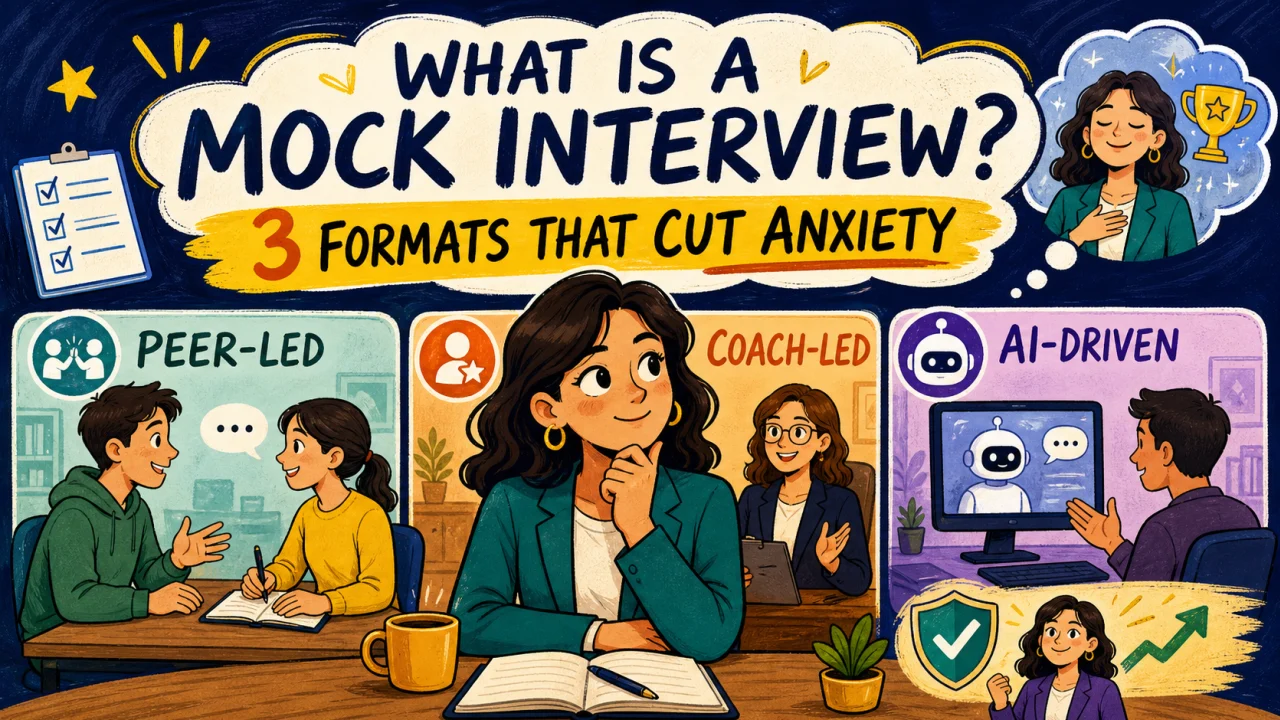
A friend is free and available, but they'll usually go easy on you. A career coach charges $100–$200 per session and delivers expert-level feedback, though scheduling can slow your prep cadence. An AI tool costs $0–$30 per month, runs 24/7, and scores you consistently—but it can't read the room or judge culture fit the way a human can. The best approach? Use AI for volume and a human for calibration. Run three AI sessions per week and one coached session every two weeks.
FAQ
Is a mock interview the same as a practice interview?
They overlap, but a mock interview specifically copies real interview conditions—timed questions, an interviewer role, and structured feedback afterward. "Practice interview" is a looser term that might just mean reading questions aloud to yourself without any formal structure or evaluation.
How long should a mock interview last?
Aim for 30 to 45 minutes, which mirrors a standard first-round interview. That gives you enough time for 8–12 questions plus a 10-minute debrief. Going longer usually leads to fatigue, which skews your performance data.
Can you do a mock interview by yourself?
Yes, but it's less effective. Record yourself answering questions on video, set a timer, and review the playback critically. You'll miss body-language feedback and follow-up questions, so pair solo rounds with at least one session that includes another person or an AI tool.
Are AI mock interviews worth it in 1970?
For most job seekers, yes. Tools like Interview Warmup and Pramp offer free tiers that score your answers on structure and filler-word usage. They won't replace a human coach for nuanced feedback, but they remove the scheduling barrier that stops people from practicing at all.
How many mock interviews should you do before a real one?
Three to five spread over two weeks is a solid target. Research on skill acquisition suggests that gains plateau after about five focused practice sessions on the same task, so beyond that point you're better off refining specific weak spots than running full mocks.