Your college interview hairstyle probably isn't going to get you rejected on its own—but it can quietly work against you before you say a single word. Admissions interviewers don't score your hair. What they do is form a first impression in the first few seconds you walk into the room, and if your hair is covering your face or looks like you're heading to a party, that impression can color everything that follows.
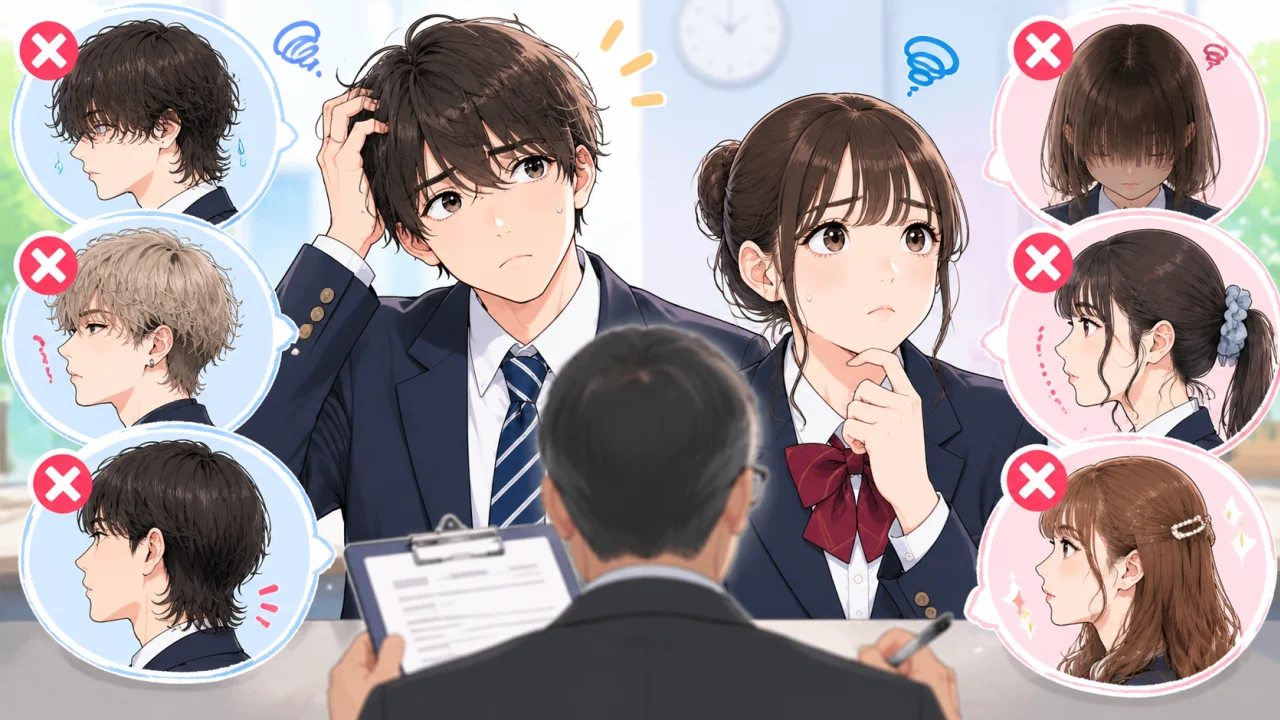
Here are the 5 most common hairstyle mistakes that hurt candidates in college admissions interviews, broken down for both guys and girls.
Does Your Hairstyle Actually Affect Your College Interview Score?
Probably not directly. But most college interviews run between 10 and 30 minutes. In that short window, your interviewer needs to get a read on your personality, your enthusiasm, and your fit. That process starts the moment you walk in—not when you start answering questions.
Why First Impressions Stick
There's a well-documented psychological effect where your initial impression of someone shapes how you interpret everything they say afterward. An interviewer who's already thinking "this student looks put-together" will lean toward charitable readings of your answers. One who clocks a sloppy appearance first has a harder time shaking that feeling, even if they're trying to be fair. Interviewers are human.
Ten Seconds Is All It Takes
From the door to your seat, you have roughly 10 seconds. If the interviewer's first thought is "sharp, confident"—great. If it's "did they just roll out of bed?"—you're already playing catch-up. Your hairstyle is one of the biggest factors in those first 10 seconds.
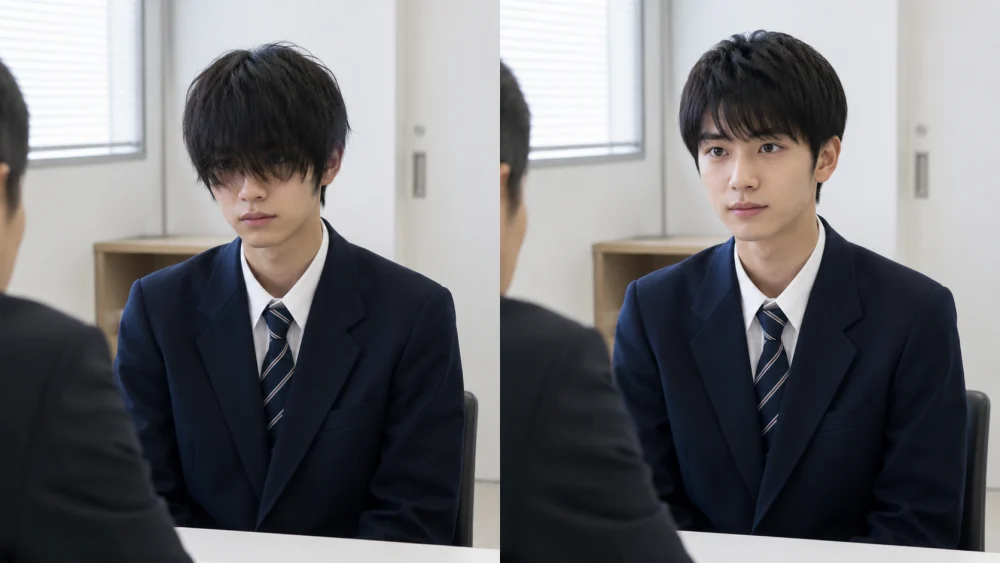
Mistake #1: Hair Covering Your Eyes or Face
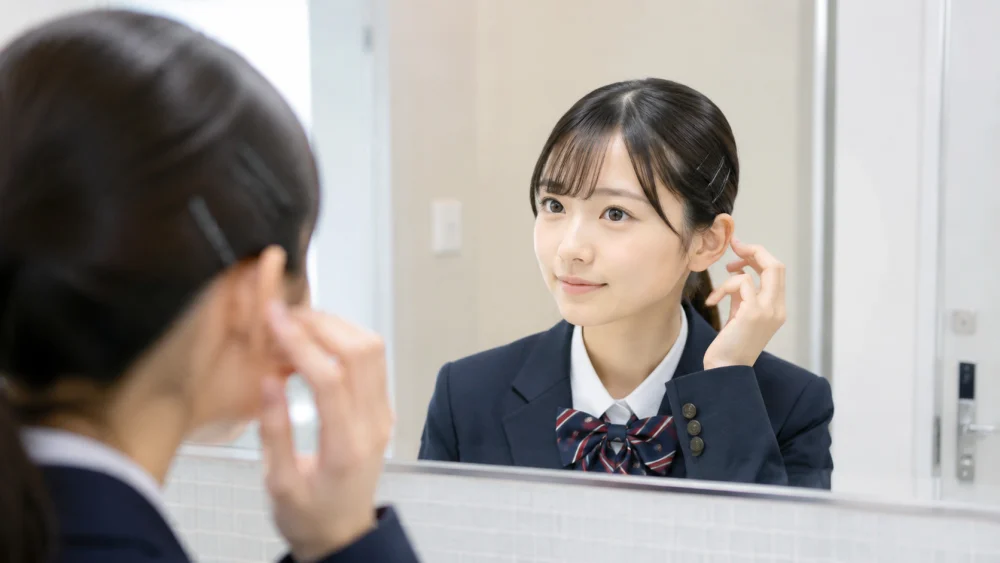
This is the most commonly flagged hairstyle issue in college interviews. If the interviewer can't clearly see your eyes and expression, you come across as either disengaged or unprepared—neither of which is the vibe you want.
The Curtain Bangs Trap (Guys)
Longer, face-framing cuts are popular right now, but if your bangs hang past your eyebrows, they work against you in an interview. You need your forehead and brows visible. The danger zone is "almost in your eyes"—because when nerves kick in and you start sweating, those bangs will fall forward. Get a trim at least a week before your interview, even if it's just the front section.
For Girls: A Simple Bobby Pin Fixes It
If your bangs are in that awkward growing-out phase, a plain black or navy bobby pin swept to the side is all you need. Skip the sparkly clips or decorative barrettes—a simple pin does the job without drawing attention to itself. The goal is just to keep your face fully visible.
Mistake #2: Styled Wisps, Loose Curls, or Any "Fashion-First" Look
What works for school or a weekend out can read as "trying too hard to look cute" in an interview room—especially to interviewers who may not follow current hair trends.
Why Face-Framing Wisps Backfire
The intentionally pulled-out, wispy strands on either side of the face are a popular style right now. The problem: to an interviewer who isn't familiar with the look, those strands read as "didn't bother to tuck everything in." It can signal carelessness, even when that was obviously never the intent. When the interviewer is 40+ years older than you, assume the trend hasn't reached them.
Skip the Curling Iron, Too
Beachy waves and styled curls signal effort—but the wrong kind of effort for an interview. The rule is simple: simple beats stylish. A straight ponytail or a flat-ironed style pulled back neatly is exactly right. You want the interviewer focused on what you're saying, not your hair.
Mistake #3: Heavy Product—Wet Look or Overly Sculpted Styles
Why the Slick Gel Look Reads as Casual (Guys)
A heavy gel finish—think wet, shiny, or extremely sculpted—looks great at a party. In an interview room, it registers as "going out" energy rather than "serious applicant" energy. A small amount of matte product to keep your hair in place and off your face is fine. Avoid anything that creates obvious shine or a crunchy hold.
When the Full Look Adds Up (Girls)
Hair that's teased or heavily volumized, combined with dramatic eye makeup, long nails, or visible jewelry (other than a simple watch), can add up to an overall impression of "not reading the room." Each element might feel minor, but interviewers see the whole picture. Accessories beyond a watch are worth leaving at home. Keep the whole area around your face—hair included—as clean and simple as possible.
Mistake #4: Hair Color That Reads as Non-Serious
There's no official rule that you must have dark hair for a college interview. But heavily lightened, bleached, or vivid-dyed hair is a consistent liability across most admissions contexts.
What to Do If Your Hair Is Naturally Light
Here's something that doesn't get discussed enough: if your hair is naturally blonde, light brown, or a warm tone, you do not need to dye it dark for your interview. Forcing it darker with a box dye—and potentially damaging your hair—can actually look worse than your natural color. If you're worried the interviewer might assume you dyed it, just be ready to say "this is my natural color" with confidence if it comes up. That's it. No documentation needed; just a calm, direct answer.
Mistake #5: Hair That Covers Your Ears or Collar
Interviewers notice more than just your bangs. Hair that completely hides your ears or falls over your collar tends to read as unkempt—regardless of whether you washed it that morning.
Guys: Clean Up the Sides and Back
If your hair at the nape of your neck touches your collar, that's the clearest signal you haven't maintained it recently. Book a quick appointment 1–2 weeks before your interview to have the sides and back trimmed. You don't have to change your overall style—just neaten the edges. That alone shifts the impression considerably.
Girls: Ponytail Isn't Your Only Option
A lot of style advice online says "ponytail" as if it's the only acceptable choice. It isn't. A bun, a half-up style, or a French twist all work perfectly well. The real standard is just two questions: Can the interviewer see your ears? Is your hair off your face? If both answers are yes, how you've secured it doesn't matter. For half-up styles, just make sure the loose portion falls behind your shoulders, not forward.
A Less-Discussed Factor: Female Interviewers Often Look More Closely at Female Applicants
This doesn't show up in most interview prep guides, but it's worth knowing. Female interviewers tend to scrutinize female applicants' grooming and appearance in more detail than their male counterparts do. It's not necessarily intentional—but it's consistent enough that if you're interviewing at a women's college, or for a program with a high proportion of female faculty (education, nursing, social work, many humanities departments), it pays to be especially careful.
Knowing this doesn't mean you need to stress about perfection. It just means "close enough" might not be as close as you think.
Pre-Interview Hair Checklist (Night Before Is Better Than Morning Of)
Your morning will be rushed. Do this the evening before so you're not scrambling.
Guys: Check Three Points
- Is your forehead visible? (Bangs not crossing your eyebrows?)
- Are your ears showing?
- Is your neckline above your collar?
Clear all three and you're set. If you use product, go with a small amount of matte paste or cream—nothing that creates shine or a stiff shell.
Girls: Check Four Points
- When your hair is styled, are your ears visible?
- Are your pins and hair ties plain black or dark navy?
- Are your bangs above your eyes?
- Have you tucked in any loose wisps or face-framing strands?
One practical tip: toss a spare hair tie and two bobby pins into your bag. Hair ties snap at the worst moments, and having a backup takes that variable completely off the table.
Key Takeaways
- Interviewers form impressions in the first 10 seconds. Your hairstyle directly affects those seconds.
- The only real standard is: face fully visible, ears showing, hair not touching your collar.
- You don't have to have a ponytail. Any style that keeps hair off your face and out of your eyes works.
- Naturally light hair doesn't need to be dyed. Just be ready to confirm it calmly if asked.
- Female interviewers often look more closely at female applicants' grooming—worth knowing before you walk in.
FAQ
Can I wear my hair down for a college interview?
Yes, if it stays off your face and doesn't cover your ears. If you have longer hair that tends to fall forward, either pull it back or use a clip to keep it behind your ears. The issue isn't the style—it's whether the interviewer can see your face clearly.
Is a bun or half-up style okay for a college admissions interview?
Completely fine. The "only ponytails" advice is overstated. Any updo or partial updo that keeps your ears visible and your hair off your face meets the standard. For half-up styles, keep the loose section behind your shoulders.
Do guys need to have short hair for college interviews?
Not necessarily. What matters is that your hair is clean, trimmed around the ears and neckline, and doesn't fall over your eyes. Medium-length hair that's neatly maintained is fine.
Can I use hair gel or pomade before my interview?
A small amount of matte product to control your hair is fine. Avoid gel that creates a wet or shiny finish—it reads as a going-out style, not an interview style.
What if my natural hair is light or curly? Do I need to straighten or dye it?
No. Work with your natural texture. If your hair is naturally curly, a neat natural style or a pulled-back curly updo is appropriate. If your hair is naturally light, leave it—don't force a dark dye job that might look unnatural or damage your hair before the interview.